








.png)



Cómo automatizar las ventas adicionales de salida tardía para aumentar el RevPAR de los alquileres vacacionales en un 5-8%
La automatización de las ventas adicionales dinámicas de salida tardía basadas en horarios de limpieza en tiempo real puede aumentar el RevPAR de los alquileres vacacionales entre un 5% y un 8%. Aprenda a sincronizar la disponibilidad del personal de limpieza con los portales de los huéspedes para monetizar las horas desocupadas de la propiedad y transformar el tiempo de inactividad en puro beneficio.

EN ESTA PÁGINA
- 01¿Por qué los operadores de alquileres vacacionales están dejando dinero sobre la mesa entre reserva y reserva?
- 02¿Por qué las aprobaciones manuales de salida tardía destruyen las rutas de limpieza?
- 03¿Cómo implementar extensiones de estancia dinámicas en 5 pasos?
- 04¿Cuántos ingresos puede generar con las extensiones de estancia?
- 05¿Cómo se compara la venta adicional manual con un motor de operaciones automatizado?
- 06¿Cómo reducen las ventas adicionales dinámicas la dependencia de las OTA?
La automatización de las ventas adicionales dinámicas de salida tardía basadas en los calendarios de limpieza en tiempo real puede aumentar instantáneamente el RevPAR de los alquileres vacacionales entre un 5% y un 8%. Al sincronizar la disponibilidad del personal de limpieza con los portales orientados a los huéspedes, los operadores monetizan de forma segura las horas diurnas desocupadas de la propiedad, transformando el tiempo de inactividad en puro beneficio sin fricción alguna. SuiteOp logra esta maximización de ingresos vinculando las ventas adicionales directamente con los datos operativos, actuando como un potente motor interno de reservas directas para extensiones de estancia.
¿Por qué los operadores de alquileres vacacionales están dejando dinero sobre la mesa entre reserva y reserva?
El modelo operativo estándar para los alquileres de corta duración gira en torno a un horario rígido. Los huéspedes salen a las 10:00 y el siguiente grupo entra a las 16:00. Esto crea una ventana de seis horas de inactividad no monetizada. Durante este intervalo, la propiedad no genera absolutamente ningún ingreso. Aunque el equipo de limpieza necesita una parte de este tiempo para limpiar y preparar la unidad, rara vez necesitan las seis horas completas. Si un limpiador tiene programado llegar a las 13:00, la propiedad permanece completamente vacía e inútil durante tres horas.
Los equipos de ingresos desean desesperadamente monetizar estas horas no utilizadas. Los huéspedes están constantemente dispuestos a pagar un extra por la comodidad de una mañana tranquila, tiempo adicional para hacer las maletas o un almuerzo tardío antes de dirigirse al aeropuerto. Sin embargo, las agencias de viajes en línea estándar restringen las ventas adicionales dinámicas el día de la salida. Plataformas como Airbnb y Vrbo obligan a los operadores a depender estrictamente de tarifas base por noche rígidas. No ofrecen ninguna funcionalidad nativa para vender extensiones por hora de forma dinámica según la ubicación del personal de limpieza.
Esta limitación arrincona a los administradores de propiedades. Deben orquestar manualmente estas extensiones fuera de la plataforma o ignorar por completo la oportunidad de ingresos. Ignorar la oportunidad ya no es una estrategia comercial viable. Con ordenanzas de alquiler a corto plazo más estrictas que limitan el número total de estancias nocturnas en muchos mercados, los equipos de ingresos deben extraer más valor de cada reserva individual. Al entrar en 2026, AirDNA informa que los operadores en mercados altamente regulados están desplazando su enfoque principal hacia la generación de ingresos auxiliares solo para mantener la rentabilidad base. Confiar únicamente en las tarifas por noche deja márgenes de beneficio masivos atrapados dentro de su calendario.
¿Por qué las aprobaciones manuales de salida tardía destruyen las rutas de limpieza?
Intentar capturar estos ingresos perdidos manualmente crea una fricción operativa extrema. Cuando un equipo de ingresos decide ofrecer salidas tardías sin un sistema automatizado, desencadena una reacción en cadena caótica que en última instancia destruye las rutas de limpieza y los tiempos de rotación.
El proceso manual suele comenzar con un mensaje de texto enviado por un huésped a las 8:30 preguntando si puede quedarse hasta el mediodía. El agente de atención al huésped ve el mensaje y quiere asegurar los ingresos adicionales. Sin embargo, el agente no puede simplemente decir que sí. Primero debe verificar si hay una entrada consecutiva esa misma tarde. Si el calendario está libre, el agente debe ponerse en contacto con el responsable de limpieza.
Los equipos de limpieza construyen sus rutas diarias en función de la eficiencia geográfica y los patrones de tráfico. El limpiador asignado a esa propiedad específica podría estar ya en tránsito. Si el agente de ingresos aprueba la salida tardía, el limpiador llega a las 10:00 solo para encontrar a los huéspedes todavía preparando el desayuno. El limpiador se ve obligado a esperar en su coche, desperdiciando valiosas horas de trabajo, o debe abandonar la propiedad, conducir por la ciudad para limpiar una unidad diferente y regresar más tarde. El costo del combustible, los salarios desperdiciados y la preparación retrasada anulan por completo la pequeña tarifa cobrada al huésped.
En peores escenarios, la comunicación se rompe por completo. El agente aprueba la extensión, pero el mensaje nunca llega al equipo de limpieza. El limpiador usa su código de acceso para entrar a la propiedad mientras los huéspedes están haciendo las maletas. Esta invasión de la privacidad genera quejas inmediatas de los huéspedes, reseñas negativas y demandas de reembolsos completos. El riesgo de fallo operativo hace que las extensiones de estancia manuales sean un riesgo en lugar de un activo. Para capturar este ingreso de forma segura, debe eliminar por completo el error humano de la ecuación.
¿Cómo implementar extensiones de estancia dinámicas en 5 pasos?
Para acceder a los ingresos ocultos atrapados en su calendario, necesita un conjunto de tecnologías operativas integradas. Este enfoque garantiza que cada oferta de venta adicional esté respaldada por datos logísticos en tiempo real. Aquí están los cinco pasos para automatizar este proceso por completo.
Paso 1: Conecte su sistema de gestión de propiedades a un centro de automatización
Su sistema de gestión de propiedades contiene el calendario maestro, pero no está diseñado para ejecutar una lógica operativa compleja. Para habilitar las ventas adicionales dinámicas, debe conectar sus datos centrales de reserva a una capa de automatización inteligente. Esta conexión permite que el sistema extraiga datos en tiempo real sobre las fechas de entrada, las fechas de salida, la información de contacto de los huéspedes y las asignaciones específicas de la propiedad.
A través del aprovechamiento de Integrations robustas, su sistema de gestión de propiedades alimenta actualizaciones de reservas en vivo en su software de operaciones. Cuando una nueva reserva entra en el sistema, el centro de automatización registra instantáneamente el cronograma exacto de la estancia. Sabe con precisión cuándo está programado que se marche el huésped y si otro huésped tiene programado llegar el mismo día. Esta sincronización continua de datos forma la base para una venta adicional sin riesgos.
Paso 2: Sincronice los horarios de limpieza en vivo y los estados de las tareas
Conocer las fechas de reserva es solo la mitad de la batalla. El sistema también debe conocer los movimientos exactos de su personal de limpieza. No puede ofrecer una salida a las 13:00 si el limpiador tiene programado llegar a las 11:00 y no tiene flexibilidad para ajustar su ruta.
Aquí es donde SuiteKeeper cierra la brecha entre la generación de ingresos y el cuidado de la propiedad. El sistema genera automáticamente horarios de limpieza basados en el calendario maestro. Asigna bloques de tiempo específicos a limpiadores individuales. Cuando el motor de ventas adicionales evalúa si debe ofrecer una salida tardía, hace referencias cruzadas con el panel de limpieza en vivo. Si el horario de un limpiador no puede acomodar un retraso, el sistema suprime la oferta. Si el limpiador tiene una tarde flexible o está programado para visitar la propiedad más tarde en el día, el sistema da luz verde a la venta adicional. Esto garantiza que los equipos de ingresos nunca vendan un tiempo que pertenece al equipo de limpieza.
Paso 3: Configure reglas de venta adicional basadas en lógica y parámetros de precios
Con los flujos de datos conectados, debe definir la lógica financiera de sus extensiones de estancia. Las tarifas fijas son comunes, pero los precios por hora a menudo producen tasas de conversión más altas. Por ejemplo, podría cobrar 20 $ por hora por cada hora posterior a la salida estándar de las 10:00, limitando la extensión a las 14:00.
Usted configura estas reglas precisas dentro de SuitePortal. El portal actúa como el conserje digital de su marca. Puede personalizar los precios en función del tamaño de la propiedad. Una villa de lujo enorme podría requerir 100 $ por hora para la salida tardía, mientras que un apartamento tipo estudio cobra 15 $. También dicta los horarios límite. La lógica garantiza que un huésped nunca pueda comprar una extensión que se superponga con una reserva entrante. Las reglas son absolutas y no requieren supervisión manual una vez activadas.
Paso 4: Automatice la comunicación con los huéspedes y la captura de pagos
El tiempo es crítico al vender extensiones de estancia. Si espera a que el huésped solicite tiempo adicional la mañana de su salida, ya habrá perdido a la mayoría de los compradores potenciales. La estrategia más eficaz es activar una oferta automatizada la noche anterior a la salida.
A las 18:00 de la noche anterior a la salida, el huésped recibe un SMS o correo electrónico automatizado. El mensaje enlaza directamente con su portal digital único. El momento psicológico es perfecto. El huésped está cansado de sus vacaciones, temiendo una alarma temprana y muy susceptible a una compra por conveniencia. Debido a que ya completaron su incorporación a través de SuiteVerify, su método de pago está tokenizado de forma segura y guardado en archivo. Simplemente hacen clic en un botón para aceptar la extensión. El sistema procesa instantáneamente el pago a través de su cuenta de Stripe conectada, pasando por alto la agencia de viajes en línea por completo. No hay solicitudes en el centro de resolución, ni pagos retrasados, ni facturas manuales.
Paso 5: Extienda al instante el acceso de la cerradura inteligente y los horarios de los dispositivos
Procesar el pago es inútil si el huésped se queda fuera de la propiedad. En una configuración estándar, el código de puerta único de un huésped caduca precisamente a la hora de salida estándar. Si pagan para quedarse hasta las 13:00 pero su código expira a las 10:00, se quedarán fuera mientras cargan su coche.
Para eliminar este punto de dolor masivo, su infraestructura de hogar inteligente debe reaccionar a la transacción financiera al instante. En el momento en que la tarjeta de crédito se procesa, SuiteConnect se comunica directamente con la cerradura inteligente a través de la API. Actualiza automáticamente el horario activo para el PIN único del huésped, extendiendo su acceso para que coincida con el minuto exacto de su nueva hora de salida. Simultáneamente, actualiza el termostato inteligente para mantener una temperatura cómoda en lugar de pasar al modo de ahorro de energía demasiado pronto. Además, SuiteMonitor permanece activo durante este período prolongado, asegurando que el huésped utilice el tiempo extra para hacer las maletas en lugar de organizar una reunión diurna no autorizada. Todo el ecosistema se adapta a la venta adicional en tiempo real sin una sola pulsación de tecla por parte de su personal.
¿Cuántos ingresos puede generar con las extensiones de estancia?
El impacto financiero de las extensiones de estancia automatizadas escala de manera agresiva en una cartera. Debido a que estos ingresos no requieren costos adicionales de adquisición de clientes ni gastos generales de alquiler adicionales, el margen de beneficio se acerca al 100 por ciento. El único costo asociado es la comisión estándar de procesamiento de tarjetas de crédito. Examinemos la realidad matemática de esta estrategia.
Calculadora de ingresos potenciales para extensiones de estancia
- Tamaño de la cartera: 50 unidades de alquiler vacacional
- Ocupación mensual promedio: 65 por ciento
- Salidas mensuales totales: Aproximadamente 160 reservas distintas
- Tasa de conversión de ventas adicionales automatizadas: 15 por ciento de los huéspedes compran una extensión
- Ventas adicionales exitosas totales: 24 salidas tardías por mes
- Tarifa de extensión promedio cobrada: 50 $ por transacción
- Incremento mensual inmediato: 1.200 $ en beneficios netos
- Ingresos auxiliares anuales generados: 14.400 $ añadidos directamente a la cuenta de resultados
Este cálculo representa una línea de base conservadora. Cuando se tienen en cuenta las entradas tempranas, las limpiezas a mitad de estancia y las tarifas por mascotas gestionadas a través del mismo portal automatizado, el apalancamiento financiero es masivo. Una perspectiva para 2026 sobre las regulaciones de gestión de propiedades y la adopción de tecnología de Rent Responsibly pronostica que los entornos de cumplimiento estricto empujarán a los operadores hacia una eficiencia extrema. Los datos indican que las propiedades que ofrecen programación dinámica automatizada experimentaron un aumento del 12 % en los ingresos auxiliares y reservas directas recurrentes en comparación con las propiedades que dependen estrictamente de flujos de trabajo manuales.
¿Cómo se compara la venta adicional manual con un motor de operaciones automatizado?
Las diferencias entre las operaciones manuales y un conjunto de tecnología inteligente se vuelven flagrantemente obvias cuando se representan una al lado de la otra. Los procesos manuales crean puntos de fricción en cada etapa del viaje del huésped, mientras que la automatización crea una red de seguridad fluida e invisible.
Cuellos de botella del proceso manual
- Origen de la solicitud del huésped: El huésped debe iniciar la conversación mediante texto o el servicio de mensajería de la plataforma, lo que limita gravemente el número total de solicitudes.
- Verificación de disponibilidad: Un miembro del personal debe comprobar manualmente el calendario de gestión de propiedades para asegurarse de que no existe una reserva consecutiva.
- Coordinación de limpieza: Los despachadores deben llamar físicamente o enviar un mensaje a los limpiadores para verificar su ubicación y negociar un cambio de ruta.
- Recaudación de pagos: El personal debe enviar una solicitud de pago a través de un centro de resolución de OTA, esperar la aprobación del huésped y sacrificar un porcentaje en comisiones de la plataforma.
- Gestión de accesos: Un miembro del equipo debe iniciar sesión en un panel de cerraduras inteligentes independiente para ampliar manualmente la ventana activa del código PIN del huésped.
Flujo de trabajo del motor de operaciones automatizado
- Solicitud proactiva: El sistema envía automáticamente una oferta de SMS dirigida al huésped en el momento exacto en que es más probable que compre.
- Validación instantánea: Los algoritmos hacen referencias cruzadas instantáneamente de los calendarios maestros y los paneles de tareas digitales para garantizar que la extensión es segura para la venta.
- Coordinación silenciosa: Los horarios de limpieza se autoajustan en segundo plano, actualizando las aplicaciones de los limpiadores al instante sin requerir una sola llamada telefónica.
- Captura sin fricción: Los pagos se procesan inmediatamente utilizando la tarjeta de crédito tokenizada de forma segura guardada en archivo del contrato de alquiler digital.
- Hardware sincronizado: Las cerraduras de las puertas, los termostatos y los monitores de ruido ajustan automáticamente sus horarios activos para reflejar la nueva hora de salida.
¿Cómo reducen las ventas adicionales dinámicas la dependencia de las OTA?
Más allá de la inyección inmediata de flujo de efectivo, procesar sus propias extensiones de estancia cumple un propósito estratégico vital. Entrena al huésped para realizar transacciones directamente con su marca. Cuando un huésped reserva una propiedad a través de una plataforma importante, ve la plataforma como el proveedor de servicios. Usted es meramente el anfitrión. Necesita un mecanismo para cambiar esa percepción.
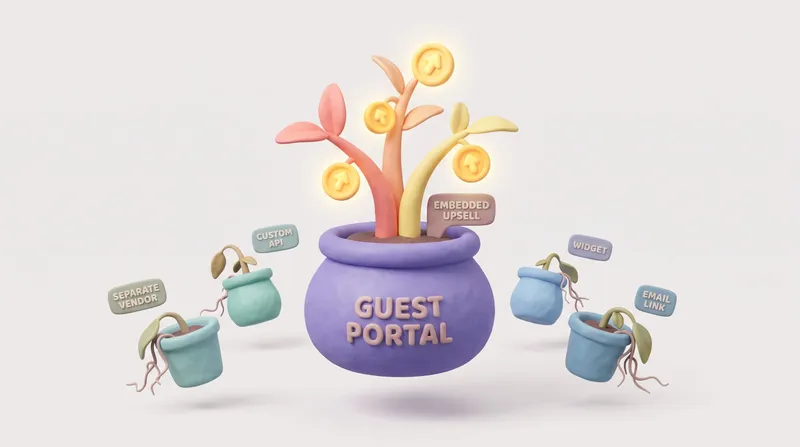
Cuando utiliza una aplicación dedicada a la experiencia del huésped, actúa como un potente motor interno de reservas directas. El huésped recibe un enlace a un portal de marca blanca con el logotipo de su empresa, los colores de su marca y sus recomendaciones localizadas. Compran su salida tardía directamente de usted. El cargo en el extracto de su tarjeta de crédito muestra el nombre de su empresa, no el nombre de un sitio de reservas de terceros.
Este proceso captura datos esenciales de los huéspedes. Usted recopila su dirección de correo electrónico real, su número de teléfono directo y sus datos de pago. Usted controla los términos de la transacción, lo que significa que se queda con todo el margen de beneficio en lugar de ceder una cuantiosa tarifa de servicio a un mercado externo. Al proporcionar una experiencia altamente profesional y orientada a la tecnología durante el proceso de venta adicional, genera una inmensa confianza en la marca. La próxima vez que ese huésped planee unas vacaciones, omitirá los algoritmos de búsqueda y reservará directamente a través de su sitio web. Automatizar sus operaciones no solo optimiza sus rutas de limpieza, sino que construye sistemáticamente su base de datos de clientes independientes.
¿Listo para automatizar sus operaciones?
Deje de permitir que los procesos manuales dicten su techo de ingresos. Vea cómo SuiteOp gestiona las extensiones de estancia dinámicas, los horarios de limpieza en vivo y la sincronización del hogar inteligente de forma automática. Reserve una demostración para verlo en acción.
Preguntas frecuentes
¿Cómo automatizo las ofertas de salida tardía para mi alquiler vacacional sin perturbar la limpieza?
Para automatizar las ofertas de salida tardía de forma segura, necesita sincronizar su sistema de gestión de propiedades con los horarios de limpieza en vivo. SuiteKeeper genera automáticamente paneles de tareas de limpieza basados en su calendario maestro y asigna bloques de tiempo específicos a los limpiadores. Cuando el motor de ventas adicionales evalúa si debe ofrecer una salida tardía, hace referencias cruzadas con el panel de limpieza en tiempo real. Si un limpiador tiene programado llegar antes de la hora de extensión solicitada y no puede acomodar un retraso, el sistema suprime la oferta. Si el horario tiene flexibilidad, el sistema da luz verde a la venta adicional y ajusta automáticamente la ruta de limpieza. Esto elimina las llamadas telefónicas manuales y evita que los limpiadores lleguen mientras los huéspedes todavía están en la propiedad.
¿Cuál es el mejor momento para ofrecer la salida tardía a los huéspedes de un alquiler vacacional?
El momento más efectivo para ofrecer la salida tardía es a las 18:00 de la noche anterior a la salida programada del huésped. En este momento, los huéspedes se están relajando de sus vacaciones, a menudo temiendo un despertar temprano por la mañana, y son muy receptivos a las compras por conveniencia. Se envía un SMS o correo electrónico automatizado con un enlace directo a su portal de huésped personalizado donde pueden comprar la extensión con un solo clic. Debido a que su método de pago ya está tokenizado a partir del contrato de alquiler digital completado a través de SuiteVerify, la transacción no tiene fricciones. Este momento proactivo aumenta drásticamente las tasas de conversión en comparación con esperar a que el huésped solicite una extensión la mañana de la salida.
¿SuiteOp extiende automáticamente el acceso de la cerradura inteligente cuando un huésped compra una salida tardía?
Sí, SuiteConnect actualiza automáticamente el acceso de la cerradura inteligente en el momento en que se procesa el pago de una salida tardía. Cuando un huésped compra una extensión de estancia a través de SuitePortal, el sistema se comunica instantáneamente con su cerradura inteligente a través de la API y amplía la ventana activa del PIN único del huésped para que coincida con su nueva hora de salida. Esto evita que los huéspedes se queden fuera mientras cargan su coche o terminan de hacer las maletas. SuiteConnect también actualiza los termostatos inteligentes para mantener temperaturas cómodas durante el período prolongado y mantiene los sensores de ruido de SuiteMonitor activos para garantizar que el tiempo extra se utilice adecuadamente. Todo el ecosistema de hogar inteligente se adapta en tiempo real sin ninguna intervención manual por parte de su personal.
¿Cuántos ingresos puedo generar con las ventas adicionales automatizadas de salida tardía?
Una cartera de alquiler vacacional de 50 unidades que opera con una ocupación del 65% puede generar aproximadamente 160 salidas por mes. Con una tasa de conversión conservadora del 15% en ofertas automatizadas de salida tardía con un precio promedio de 50 $ por extensión, puede capturar 1.200 $ en ingresos auxiliares mensuales o 14.400 $ al año. Debido a que este ingreso requiere cero costos adicionales de adquisición de clientes y gastos generales mínimos, el margen de beneficio se acerca al 100% menos las tarifas de procesamiento de tarjetas de crédito. Cuando incorpora entradas tempranas, limpiezas a mitad de estancia y otras ventas adicionales automatizadas gestionadas a través del mismo portal, los ingresos auxiliares totales pueden aumentar en un 12% o más en comparación con las propiedades que dependen de flujos de trabajo manuales.
¿Cómo ayudan las ventas adicionales automatizadas a reducir mi dependencia de Airbnb y Vrbo?
Procesar sus propias extensiones de estancia a través de un portal de huéspedes de marca blanca entrena a los huéspedes para realizar transacciones directamente con su marca en lugar de ver a la OTA como su proveedor principal de servicios. Cuando los huéspedes compran la salida tardía a través de SuitePortal, ven el logotipo de su empresa, los colores de su marca y el cargo en el extracto de su tarjeta de crédito muestra el nombre de su negocio. Usted captura su correo electrónico real, número de teléfono y datos de pago mientras se queda con el 100% del margen de beneficio en lugar de ceder las tarifas de servicio de las OTA. Esta experiencia profesional y avanzada tecnológicamente genera confianza en la marca y lo posiciona como un operador sofisticado. La próxima vez que ese huésped planee unas vacaciones, es mucho más probable que omita los algoritmos de búsqueda de las OTA y reserve directamente a través de su sitio web, reduciendo la dependencia de plataformas de terceros.
¿Qué sucede si apruebo manualmente las salidas tardías en lugar de automatizar el proceso?
Las aprobaciones manuales de salida tardía crean una fricción operativa severa que a menudo anula el beneficio de los ingresos. Cuando un huésped solicita una salida tardía por mensaje de texto, su personal debe verificar el calendario, ponerse en contacto con el despacho de limpieza, negociar cambios de ruta y ampliar manualmente el acceso de la cerradura inteligente. Si la comunicación falla, los limpiadores pueden llegar mientras los huéspedes todavía están haciendo las maletas, lo que provoca violaciones de la privacidad y reseñas negativas. Los limpiadores obligados a esperar desperdician horas facturables, y rerutarlos por la ciudad aumenta los costos de combustible y retrasa otras rotaciones. La recaudación de pagos a través de los centros de resolución de las OTA incurre en tarifas de plataforma y pagos retrasados. Al automatizar todo el flujo de trabajo con sistemas integrados, elimina el error humano, reduce los costos laborales y captura ingresos que se procesan instantáneamente fuera del ecosistema de las OTA.