
En 2026, la parité des prix dynamiques signifie que la mise à l'échelle des entreprises STR dépend entièrement de l'optimisation du coût par rotation (CPT). Les gestionnaires immobiliers augmentent leurs valorisations non pas en augmentant l'ADR, mais en déployant des systèmes d'exploitation centralisés comme SuiteOp pour automatiser les interventions, éliminer la maintenance fantôme et transformer les frictions de main-d'œuvre imprévisibles en marges opérationnelles fixes et évolutives.
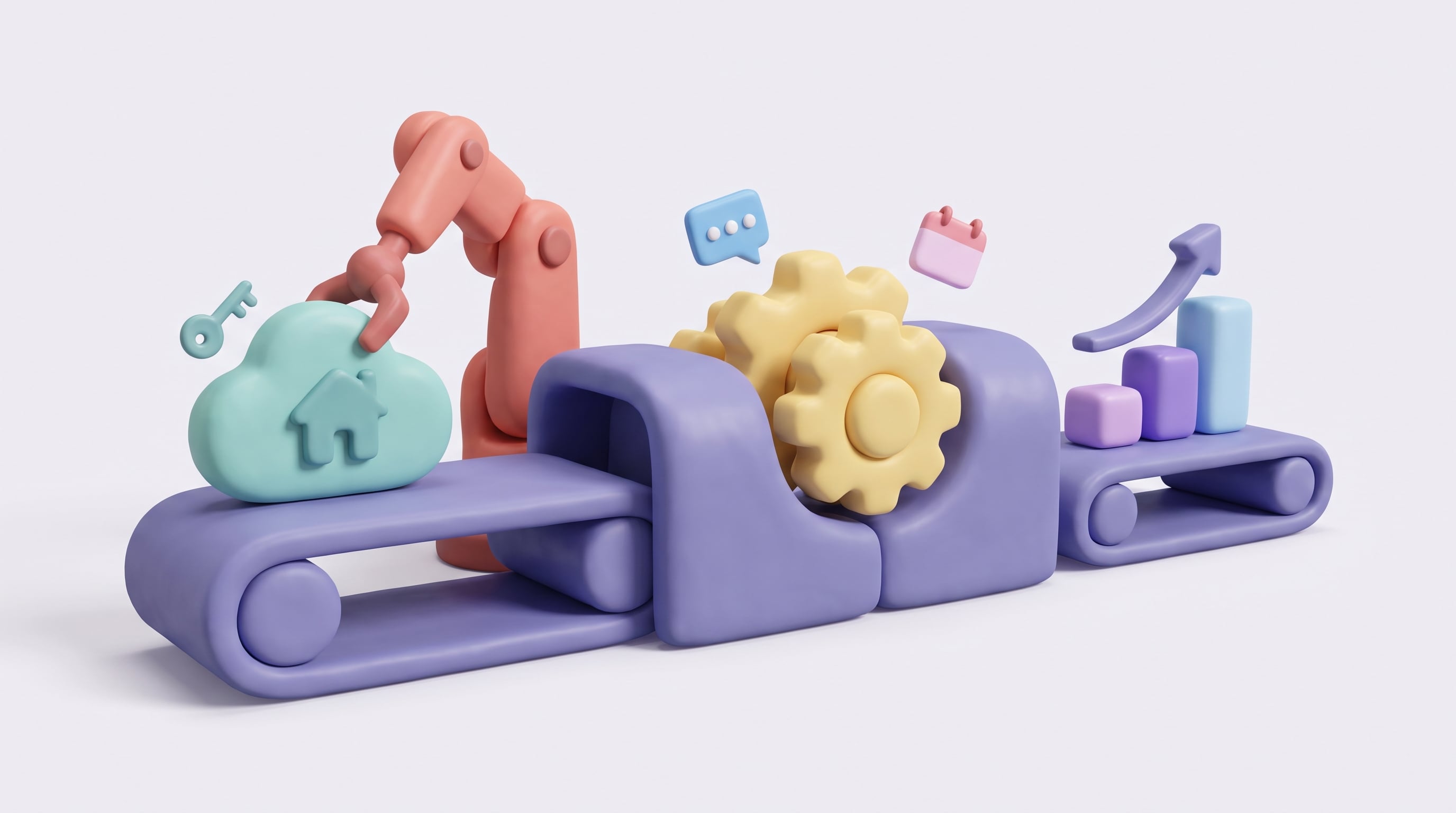
Concept visuel : un graphique de trajectoire de tendance montrant une ligne horizontale plate représentant des rendements d'optimisation de l'ADR stagnants, croisée par une ligne ascendante abrupte représentant une croissance exponentielle de la valorisation du portefeuille stimulée par l'optimisation automatisée du coût par rotation (OpEx).
Pourquoi la parité des prix dynamiques a-t-elle brisé le modèle de croissance traditionnel ?
Au cours de la dernière décennie, les gestionnaires immobiliers se sont appuyés sur une formule simple pour devancer leurs concurrents. Ils ont déployé des algorithmes de tarification dynamique pour augmenter le tarif journalier moyen (ADR), capturant des revenus que la tarification manuelle ratait. Cet avantage en matière de gestion des revenus a financé l'expansion. Aujourd'hui, cet avantage n'existe plus. La parité des algorithmes a égalisé les règles du jeu. Chaque concurrent majeur de votre marché utilise des outils de gestion des revenus similaires. Les bassins de données sont les mêmes. Les recommandations de tarification sont largement identiques. Lorsque chaque gestionnaire immobilier optimise pour les mêmes événements de pointe et les mêmes creux saisonniers, la tarification cesse d'être un facteur de différenciation concurrentielle.
Lorsque vous tracez la trajectoire financière des locations de courte durée d'entreprise en 2026, une réalité éclatante émerge. Alors que la croissance de l'ADR s'aplatit et que la saturation du marché augmente, la stratégie traditionnelle de croissance par l'inflation du chiffre d'affaires est mathématiquement épuisée. Ajouter plus de propriétés à un portefeuille tout en fonctionnant avec des marges minces et non optimisées ne fait que multiplier les responsabilités au lieu de multiplier les profits.
Lorsque les revenus stagnent, l'hémorragie des marges devient fatale. Les gestionnaires d'entreprise gérant entre 100 et 500 unités font face à une crise cumulée. Les équipes opérationnelles sont contraintes de desservir un plus grand nombre de propriétés avec le même effectif, ce qui entraîne une dégradation du contrôle de la qualité. L'attention des PDG, fondateurs et vice-présidents des opérations doit pivoter brusquement. La question n'est plus de savoir comment extraire cinq dollars de plus par nuit d'un voyageur, mais comment cesser de perdre cinquante dollars par semaine en frictions opérationnelles. La mise à l'échelle en 2026 exige un virage agressif vers l'optimisation du coût par rotation. Les opérateurs d'entreprise qui obtiennent les multiples les plus élevés lors des acquisitions sont ceux qui prouvent que leurs dépenses opérationnelles sont fixes, prévisibles et fortement automatisées.
Quel est le véritable coût d'une rotation non optimisée ?
Pour comprendre l'urgence de l'optimisation du coût par rotation, vous devez disséquer l'anatomie d'une rotation non optimisée. La plupart des gestionnaires immobiliers calculent le coût d'une rotation en se basant simplement sur le tarif forfaitaire du service de ménage. C'est une erreur de calcul fatale. Le véritable coût inclut les heures administratives invisibles, les problèmes de communication, le gaspillage d'énergie et les interventions d'urgence qui érodent la rentabilité de l'intérieur.
Considérez le phénomène du déplacement de maintenance fantôme. Un voyageur envoie un message à votre équipe de support pour se plaindre que le Wi-Fi est en panne ou que la serrure connectée ne s'ouvre pas. Parce que l'agent de première ligne ne dispose pas d'outils de diagnostic à distance, il dépêche un technicien de maintenance. Le technicien roule pendant trente minutes, entre dans la propriété et découvre que le routeur avait simplement besoin d'être branché ou que le voyageur tapait le mauvais code. Ce seul déplacement fantôme coûte en moyenne entre soixante-quinze et cent dollars en main-d'œuvre, en carburant et en coût d'opportunité perdu. Multipliées par un portefeuille de 200 unités sur un an, ces micro-pertes représentent des dizaines de milliers de dollars de profit évaporé.
L'acheminement inefficace des préposés au nettoyage constitue une autre fuite massive. Lorsque les nettoyeurs s'appuient sur des applications de communication fragmentées et des feuilles de calcul manuelles, les changements d'horaire provoquent le chaos. Un voyageur demande un départ tardif. Le gestionnaire immobilier l'approuve mais oublie d'en aviser immédiatement l'équipe de nettoyage. Le nettoyeur arrive, trouve le voyageur encore dans le logement et doit attendre dans sa voiture pendant une heure. Cette heure non facturée détruit la marge de cette réservation. Chaque minute passée à envoyer des SMS aux nettoyeurs, à mettre à jour manuellement les codes d'accès ou à vérifier qu'une propriété est réellement prête pour le voyageur suivant est une minute non consacrée à l'acquisition de nouveaux propriétaires. Vous ne pouvez pas faire croître un portefeuille si votre équipe opérationnelle est piégée dans un cycle d'interventions réactives.
Comment les changements réglementaires de 2026 forcent-ils la précision opérationnelle ?
L'optimisation opérationnelle ne consiste plus seulement à réduire les coûts internes. Il s'agit de plus en plus d'éviter des sanctions financières existentielles. D'ici 2026, la conformité opérationnelle est devenue une variable de dépenses majeure, les villes appliquant des limites strictes en matière de bruit sous peine d'amendes massives. L'environnement réglementaire est passé d'une observation passive à une application active.
Les municipalités déploient des politiques de tolérance zéro pour les troubles de voisinage. Selon les directives récentes sur le bruit et les lois régissant les locations de courte durée, les juridictions mettent en œuvre des seuils de décibels stricts de jour comme de nuit, assortis de lourdes peines en cas d'infraction. Une propriété non surveillée représente un risque de responsabilité massif. Si un voyageur organise une fête non autorisée et écope d'une amende de mille dollars, la rentabilité de cette unité spécifique est anéantie pour tout le mois.
En outre, les règles mises à jour concernant le bruit des locations de courte durée qui entreront en vigueur en 2026 tiennent explicitement les gestionnaires immobiliers légalement responsables d'une intervention rapide en cas de bruit excessif pendant les heures de calme. Vous ne pouvez plus plaider l'ignorance. Les municipalités urbaines mettent continuellement à jour leurs exigences en matière de lutte contre les nuisances, comme on peut le voir dans les modifications apportées aux lois sur les locations de courte durée, ce qui signifie que les propriétés non surveillées risquent de perdre complètement leurs permis d'exploitation. Les calculs du coût par rotation doivent désormais intégrer l'atténuation des risques. Une rotation véritablement optimisée est une rotation où le risque est neutralisé par algorithme avant qu'une infraction ne se produise.
Comment les opérateurs d'entreprise transforment-ils la main-d'œuvre imprévisible en marges fixes ?
La solution à l'hémorragie des marges réside dans une standardisation et une automatisation rigoureuses. Pour y parvenir, les opérateurs d'entreprise abandonnent leur mosaïque d'outils logiciels décousus au profit de systèmes d'exploitation unifiés. Cette transition est le moment où SuiteOp redéfinit la trajectoire de croissance. SuiteOp fonctionne comme l'infrastructure stratégique pour la gestion des locations de courte durée d'entreprise. Il remplace la surveillance manuelle par une exécution automatisée. En traitant la propriété comme un écosystème connecté, les équipes opérationnelles obtiennent une visibilité granulaire sur chaque seconde du processus de rotation.
La transformation commence par la coordination de la main-d'œuvre. Grâce à SuiteKeeper, les tâches de nettoyage et de maintenance sont générées automatiquement dès la confirmation d'une réservation. Le système intègre les données de votre PMS et planifie dynamiquement votre personnel en fonction de la proximité géographique, de la taille de la propriété et de règles opérationnelles personnalisées. Si un voyageur achète un départ tardif, SuiteKeeper met instantanément à jour l'horaire du nettoyeur. Aucun message texte manuel n'est requis. La friction est complètement éliminée.
Pour stopper les déplacements de maintenance fantôme, les opérateurs doivent déployer une gestion intelligente du matériel. Avec SuiteConnect, votre équipe opérationnelle peut diagnostiquer et résoudre les problèmes à distance sans avoir à envoyer un technicien sur place. Les niveaux de batterie des serrures connectées sont surveillés de manière proactive. Les thermostats sont automatiquement réglés dès le départ d'un voyageur, réduisant ainsi le gaspillage d'énergie. Le système crée un pont direct entre votre logiciel opérationnel et le matériel physique à l'intérieur du logement.
Le contrôle des marges nécessite également de protéger l'actif contre les dommages catastrophiques. Les fêtes non enregistrées et les plaintes pour bruit excessif entraînent des amendes coûteuses, des voisins furieux et des factures de grand nettoyage. En déployant SuiteMonitor, les opérateurs reçoivent des alertes en temps réel dès que les niveaux de décibels ou les seuils d'occupation sont dépassés. Des messages automatisés avertissent immédiatement le voyageur, résolvant le problème avant que les forces de l'ordre ou les voisins ne soient impliqués. Ce mécanisme de défense proactive protège l'actif physique tout en protégeant simultanément la marge opérationnelle de l'entreprise.
Qu'est-ce qui différencie une pile technologique fragmentée d'un système d'exploitation des opérations unifié ?
L'industrie de la location de courte durée est actuellement en proie à la fatigue applicative. Les gestionnaires utilisent souvent une application pour la messagerie des voyageurs, une autre pour les serrures connectées, une troisième pour la planification des nettoyeurs et une quatrième pour les livrets d'accueil numériques. Cette fragmentation crée de dangereux silos de données. Lorsque les systèmes ne communiquent pas parfaitement, les opérateurs humains doivent combler l'écart manuellement. Cela nécessite l'embauche de personnel administratif supplémentaire, ce qui détruit directement la métrique du coût par rotation.
Un système d'exploitation des opérations unifié élimine ces lacunes. En consolidant les fonctions, les opérateurs obtiennent la capacité de suivre le coût exact de la rotation au centime près. Ils peuvent mesurer l'efficacité des nettoyeurs, les temps de résolution de la maintenance et la consommation d'énergie dans un tableau de bord unique. L'élimination de la fragmentation est la condition préalable à une véritable mise à l'échelle de l'entreprise.
L'approche fragmentée par rapport à l'écosystème unifié SuiteOp
- Vérification des voyageurs : Les systèmes fragmentés obligent les agents à examiner manuellement les pièces d'identité et à réclamer les dépôts de garantie. SuiteOp utilise SuiteVerify pour filtrer automatiquement les voyageurs, vérifier leur identité et retenir les dépôts avant d'accorder l'accès.
- Expérience des voyageurs : Les configurations fragmentées envoient des PDF statiques ou des e-mails génériques pour les instructions d'arrivée. SuiteOp propose un SuitePortal en marque blanche qui guide le voyageur tout au long de l'arrivée, propose des ventes incitatives pour les arrivées hâtives et fournit des recommandations locales dynamiques directement liées au calendrier opérationnel.
- Contrôle d'accès : Les outils fragmentés forcent les gestionnaires à générer et à envoyer manuellement par SMS les codes de porte. SuiteOp génère automatiquement des codes uniques via le concentrateur matériel, les active uniquement une fois la vérification terminée et les révoque instantanément au moment du départ.
- Connexions système : Les piles fragmentées reposent sur des connecteurs tiers fragiles qui se brisent lors des mises à jour des propriétés. SuiteOp offre des Intégrations natives avec les principaux systèmes de gestion immobilière, garantissant une synchronisation des données transparente et en temps réel.
Lorsque vous éliminez la pile fragmentée, vous éliminez l'excès d'abonnements logiciels. Plus important encore, vous éliminez le besoin d'embaucher des coordinateurs administratifs supplémentaires juste pour gérer les alertes logicielles. Votre équipe gère l'entreprise, pas le logiciel.
Comment la preuve de la protection opérationnelle prévient-elle le départ des propriétaires ?
Un problème majeur pour les entreprises de location de courte durée en croissance est le taux de résiliation des contrats par les propriétaires. Les propriétaires immobiliers sont des investisseurs sophistiqués. Ils se soucient profondément du rendement de leur actif, mais ils se soucient tout autant de la préservation de cet actif. Par le passé, les gestionnaires immobiliers pouvaient masquer les inefficacités opérationnelles avec des versements de revenus élevés stimulés par une tarification agressive. À mesure que les revenus bruts se stabilisent, les propriétaires examinent beaucoup plus attentivement les dépenses et l'usure des biens.
Lorsqu'un propriétaire voit des frais de maintenance inexpliqués, des factures de services publics anormalement élevées et de mauvais scores d'avis en raison de nettoyages manqués, il perd rapidement confiance. Le gestionnaire qui ne peut pas prouver quantitativement son efficacité perdra le contrat au profit d'un concurrent qui le peut. La fidélisation en 2026 repose entièrement sur la transparence opérationnelle.
Les gestionnaires d'entreprise utilisent SuiteOp pour bâtir un mur de confiance impénétrable avec leurs propriétaires. Le système suivant chaque action, les gestionnaires peuvent fournir aux propriétaires des données concrétisables et indéniables. Vous pouvez montrer à un propriétaire exactement combien de fois le système HVAC a été éteint automatiquement pour économiser de l'énergie lors du départ du voyageur. Vous pouvez lui montrer les horodatages exacts de l'entrée et de la sortie du préposé au nettoyage, validés par les journaux d'accès de la serrure connectée. Vous pouvez prouver qu'un filtrage automatisé a bloqué une réservation à haut risque le trimestre dernier, protégeant ainsi leur propriété contre une fête.
Les données sont l'outil de fidélisation par excellence. Lorsque vous pouvez vous asseoir en face d'un propriétaire et prouver que votre optimisation du coût par rotation est mathématiquement supérieure à celle de la concurrence, le départ des propriétaires chute presque à zéro. Vous transformez votre logiciel opérationnel d'un utilitaire de back-office en un actif de vente et de fidélisation de premier plan. Vous ne gérez pas seulement leur propriété ; vous concevez et protégez activement sa rentabilité.
Quelle est la trajectoire de tendance pour 2026 en matière d'optimisation du coût par rotation ?
Alors que nous naviguons dans le paysage actuel des entreprises, la consolidation du marché de la location de courte durée ne fera que s'accélérer. Le capital institutionnel et les groupes de capital-investissement exigent une maturité opérationnelle. L'approche dépassée de la mise à l'échelle, qui reposait sur la simple force de volonté, les feuilles de calcul et les de longues heures administratives, est complètement obsolète.
Les entreprises qui domineront leurs marchés locaux cartographient actuellement chaque point de contact de leur processus de rotation. Elles mesurent les minutes de main-d'œuvre exactes nécessaires pour préparer une unité. Elles auditent les taux de défaillance de leurs appareils domestiques intelligents. Elles optimisent leurs chaînes d'approvisionnement et éliminent la saisie manuelle des données. Ces opérateurs comprennent une vérité commerciale fondamentale. Cent dollars de plus en revenus de réservation sont lourdement taxés, partagés avec le propriétaire et soumis aux frais de plateforme OTA. Mais cent dollars économisés grâce à l'efficacité opérationnelle vont directement dans le résultat net. C'est une marge pure et dure.
Pour atteindre ce niveau de précision, l'intervention humaine doit être traitée comme un dernier recours. Votre logiciel devrait gérer la grande majorité de la charge opérationnelle quotidienne. Il devrait valider les voyageurs, planifier les nettoyeurs, gérer la climatisation, surveiller le bruit et percevoir les paiements sans intervention humaine. Le personnel humain ne devrait intervenir que lorsque le logiciel signale une anomalie absolue.
C'est la promesse d'un système d'exploitation unifié. Il permet à un vice-président des opérations de gérer cinq cents unités avec exactement le même niveau de stress et le même effectif administratif que cinquante unités. Il fournit au fondateur les données de performance propres requises pour obtenir un financement ou négocier une sortie d'entreprise hautement rentable. L'ère de l'avantage tarifaire est révolue. L'ère de l'avantage opérationnel ne fait que commencer.
Prêt à automatiser vos opérations ?
Voyez comment SuiteOp gère automatiquement l'optimisation du coût par rotation. Réservez une démo pour le voir en action.
Voyez-le fonctionner sur vos propriétés
Une démo de 30 minutes avec notre équipe, sur les processus de votre propre portefeuille.
Questions fréquentes
- Qu'est-ce que l'optimisation du coût par rotation dans la gestion des locations courte durée ?
- L'optimisation du coût par rotation consiste à minimiser chaque dépense opérationnelle engagée lors de la rotation d'une propriété de location courte durée entre deux séjours de voyageurs. Cela inclut les coûts directs tels que le ménage et la blanchisserie, ainsi que les coûts cachés comme le travail administratif, les interventions de maintenance fantômes, le gaspillage d'énergie, les inefficacités de planification manuelle et l'atténuation des risques de conformité. Le calcul réel du coût par rotation prend en compte tous les points de friction du cycle de rotation. Les opérateurs d'envergure atteignent cette optimisation en déployant des systèmes d'automatisation qui éliminent la coordination manuelle, réduisent les interventions d'urgence grâce aux diagnostics à distance et standardisent les processus sur l'ensemble de leur portefeuille. Lorsque la parité tarifaire élimine les avantages en matière de revenus, la réduction du coût par rotation devient le principal levier pour accroître la valorisation du portefeuille et les marges bénéficiaires.
- Comment SuiteOp aide-t-il à réduire les coûts opérationnels des gestionnaires de locations de vacances ?
- SuiteOp réduit les coûts opérationnels en consolidant des logiciels fragmentés en un système d'exploitation unifié qui automatise l'ensemble du flux de travail de rotation. SuiteKeeper planifie automatiquement les tâches de nettoyage et de maintenance en fonction des données de réservation, de la proximité géographique et de la taille de la propriété, éliminant ainsi les SMS manuels et les erreurs de planification. SuiteConnect permet le diagnostic à distance des serrures connectées, des thermostats et d'autres appareils IoT, évitant ainsi les interventions de maintenance fantômes coûteuses où les techniciens se déplacent pour réparer de simples problèmes comme un routeur débranché. SuiteMonitor fournit des alertes de bruit et d'occupation en temps réel pour prévenir les amendes municipales onéreuses et les dommages matériels. SuiteVerify automatise le filtrage des voyageurs et la vérification d'identité pour réduire les risques. En éliminant la friction administrative et la coordination manuelle, SuiteOp permet aux équipes opérationnelles de gérer des portefeuilles plus importants avec le même effectif, améliorant directement les marges opérationnelles.
- Que sont les interventions de maintenance fantômes et combien coûtent-elles aux opérateurs de locations courte durée ?
- Les interventions de maintenance fantômes surviennent lorsqu'un technicien est envoyé sur une propriété pour un problème qui aurait pu être résolu à distance ou qui était causé par une erreur du voyageur plutôt que par une véritable panne d'équipement. Parmi les exemples courants, citons les voyageurs signalant des pannes de Wi-Fi alors que le routeur doit simplement être branché, des défaillances de serrures connectées causées par des codes incorrects, ou des problèmes de thermostat qui peuvent être réglés à distance. Chaque intervention fantôme coûte en moyenne entre 75 $ et 100 $ en tenant compte de la main-d'œuvre, du carburant, du temps de trajet et du coût d'opportunité perdu. Pour un portefeuille de 200 unités, ces micro-pertes peuvent atteindre des dizaines de milliers de dollars par an. Les grands opérateurs éliminent les interventions fantômes en déployant des outils de diagnostic à distance comme SuiteConnect, qui offre une visibilité en temps réel sur l'état des appareils et permet un dépannage à distance avant d'envoyer des techniciens sur le terrain, souvent onéreux.
- Quel est l'impact des réglementations sur le bruit en 2026 sur les coûts opérationnels des locations courte durée ?
- D'ici 2026, les municipalités ont mis en place des politiques de tolérance zéro en matière de bruit, assorties de seuils stricts de décibels de jour comme de nuit, entraînant de lourdes sanctions financières en cas d'infraction. Les gestionnaires immobiliers sont tenus légalement responsables d'une intervention rapide en cas de bruit excessif pendant les heures de calme, et des infractions répétées peuvent entraîner la révocation du permis. Une seule fête non autorisée entraînant une amende de mille dollars peut anéantir tout un mois de rentabilité pour cette unité. Les propriétés non surveillées représentent des risques de responsabilité colossaux qui ont un impact direct sur les calculs du coût par rotation. Les opérateurs d'envergure atténuent ce risque en déployant des solutions de surveillance du bruit en temps réel comme SuiteMonitor, qui alerte les gestionnaires dès que les seuils de décibels ou d'occupation sont dépassés et permet des avertissements automatisés aux voyageurs avant que les voisins ou les forces de l'ordre n'interviennent. Cette stratégie de conformité proactive protège à la fois l'actif physique et les marges opérationnelles tout en évitant des sanctions réglementaires catastrophiques.
- Pourquoi un système d'exploitation unifié est-il préférable à l'utilisation de plusieurs logiciels distincts ?
- Les écosystèmes technologiques fragmentés créent de dangereux silos de données qui obligent les administrateurs humains à combler manuellement les lacunes entre les systèmes, détruisant l'efficacité opérationnelle et augmentant les coûts de main-d'œuvre. Lorsqu'une application gère la vérification des voyageurs, qu'une autre s'occupe des serrures connectées, qu'une troisième planifie les équipes de ménage et qu'une quatrième fournit des guides d'accueil, les gestionnaires perdent la capacité de suivre les coûts de rotation exacts et doivent embaucher du personnel administratif supplémentaire pour coordonner les différentes plateformes. Un système d'exploitation unifié tel que SuiteOp élimine ces lacunes en consolidant toutes les fonctions dans un écosystème unique où les données circulent de manière fluide. Des flux de travail automatisés se déclenchent à travers les modules sans intervention humaine. Par exemple, lorsqu'un voyageur réserve, SuiteVerify le filtre, SuiteKeeper planifie l'équipe de ménage, SuiteConnect génère des codes d'accès uniques et SuitePortal transmet les instructions d'arrivée, le tout automatiquement. Cette consolidation élimine la surcharge d'abonnements logiciels, réduit les effectifs administratifs et fournit des tableaux de bord de performance unifiés qui permettent un suivi précis du coût par rotation.
- Comment la transparence opérationnelle aide-t-elle à prévenir le départ des propriétaires de biens ?
- Les propriétaires de biens immobiliers examinent de plus en plus l'efficacité opérationnelle et la préservation des actifs alors que la croissance des revenus bruts stagne. Lorsqu'ils constatent des frais de maintenance inexpliqués, des factures de services publics anormalement élevées ou de mauvais avis dus à des nettoyages manqués, les propriétaires perdent rapidement confiance et se tournent vers des concurrents capables de prouver des performances supérieures. La transparence opérationnelle transforme votre logiciel de gestion d'un simple utilitaire de back-office en un outil de fidélisation de premier plan. Avec SuiteOp, les gestionnaires fournissent aux propriétaires des données concrètes montrant exactement quand les systèmes HVAC ont été éteints automatiquement pour économiser de l'énergie, des horodatages précis de l'entrée des agents d'entretien validés par les journaux des serrures connectées, et la documentation sur la manière dont le filtrage automatisé a bloqué les réservations à haut risque qui auraient endommagé leur propriété. Cette preuve quantifiable de l'optimisation du coût par rotation et de la protection des actifs crée un mur de confiance impénétrable. Lorsque vous démontrez une efficacité mathématiquement supérieure à celle de vos concurrents, le taux de départ des propriétaires chute presque à zéro et la rétention devient un avantage concurrentiel.