
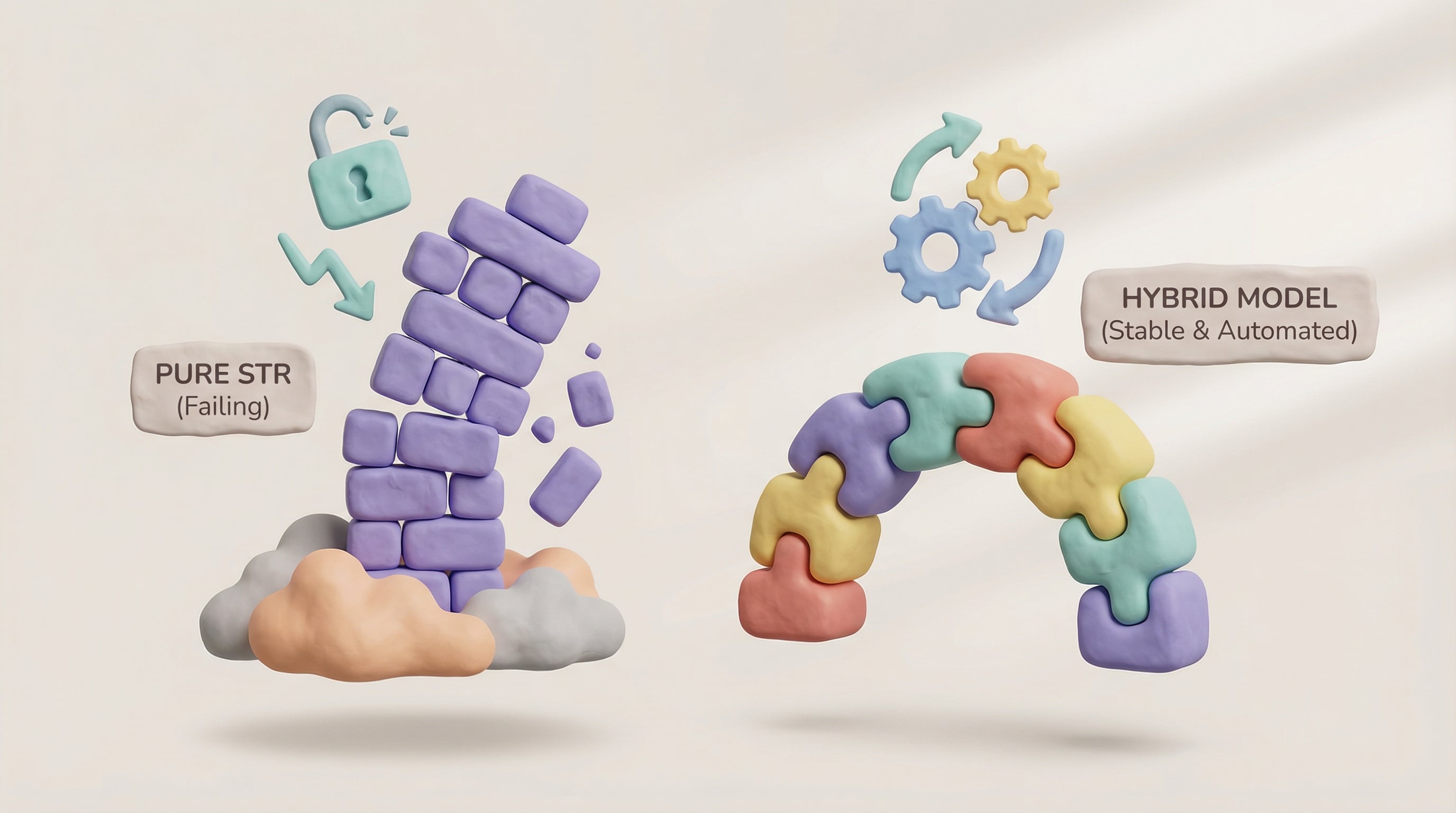
The bottom line: The pure short-term rental model is a liability in 2026. Asset managers must adopt a flexible hybrid strategy that fluidly switches between nightly stays and mid-term leases to bypass regulatory caps and stabilize cash flow. This approach turns regulatory threats into occupancy safety nets.
The Binary Bet is a Losing Strategy
For the last decade, property managers operated on a binary choice: you were either a landlord with annual leases or a host with nightly bookings. In 2026, that binary is dead. The "Pure-Play" STR operator is being squeezed out of existence by two opposing forces: aggressive regulatory caps in high-yield markets and the undeniable volatility of seasonal demand.
Asset managers holding 50 to 500 units can no longer afford to let inventory sit empty during shoulder seasons or risk portfolio-wide shutdowns due to a single legislative change. The market has shifted. Survival now depends on the ability to toggle a unit's identity instantly. A property must be a high-yield vacation rental in July and a stable corporate housing unit in November.
Why the Pure-Play Model Bleeds NOI
Relying exclusively on platforms like Airbnb or VRBO exposes large portfolios to existential risks that did not exist five years ago. Two specific factors are driving this change in 2026:
1. The Regulatory "Kill Switch"
Governments are no longer just fining operators; they are utilizing platform data to automate enforcement. With laws like California's SB 346 fully effective as of January 2026, cities can compel platforms to hand over booking data, instantly cross-referencing it against zoning maps. If your portfolio relies 100% on STR revenue in a zone that suddenly enforces a 30-day minimum, your revenue drops to zero overnight.
2. The Shoulder Season Dead Zone
The "digital nomad" boom has settled into a predictable pattern of flexible living, but nightly tourist demand has not kept pace with the massive supply of STR inventory added between 2022 and 2025. This supply glut has turned traditional shoulder seasons into dead zones. Data from Q1 2026 indicates that urban STR portfolios running pure nightly strategies saw RevPAR dip by 18% during off-peak months compared to hybrid portfolios that pivoted to 30+ day stays.
The Solution: Dynamic Asset Logic
The Hybrid Operator does not see a property as fixed; they see it as fluid. However, the barrier to this strategy has always been operational complexity. Managing a three-night guest requires a different legal framework, access code, and cleaning protocol than managing a three-month tenant.
This is where SuiteKeeper and the broader SuiteOp ecosystem fundamentally change the mechanics of asset management. We call this "Dynamic Asset Logic", the ability to switch a property's entire operating system between "Guest Mode" and "Tenant Mode" without retraining your staff.
Automating the Lease vs. License Dilemma
When a booking comes in for 45 days, you cannot rely on a standard platform waiver. You need a legally binding lease agreement to protect against squatters rights and eviction complexities. SuiteVerify detects the length of stay and automatically triggers the correct documentation workflow. A two-night guest gets a security deposit hold and a waiver; a two-month tenant gets a background check and a digital lease, all automated before check-in.
Solving the Access Control Headache
In a manual hybrid model, staff members often forget to extend smart lock codes for long-term guests, leading to lockouts, or fail to revoke them, leading to security risks. SuiteConnect eliminates this by syncing directly with the booking duration. If a mid-term tenant extends their stay by a week, their access code validity extends instantly across all hardware, including main entries and common areas.
Operational Comparison: Manual vs. Automated Hybrid
Moving to a hybrid model without the right infrastructure creates chaos. Here is how the workflow differs:
The Efficiency Gap
- Tenant Screening: Manual background checks (2-3 days) vs. SuiteVerify instant scoring (minutes).
- Contract Management: Emailing PDFs for signature vs. Auto-generated digital leases based on stay length.
- Guest Experience: Confusing PDF guides vs. SuitePortal providing dynamic content (e.g., trash schedules tailored to long-term residents).
- Turnover Logic: Manually scheduling cleans vs. SuiteKeeper auto-assigning "Deep Cleans" for move-outs and "Light Cleans" for mid-stay refreshers.
Protecting Yield Through flexibility
The hybrid strategy is not just about survival; it is about yield optimization. By utilizing this dual approach, asset managers can capture the high ADR of peak tourist seasons while locking in guaranteed occupancy during the off-season. This smoothes out the cash flow valleys that typically terrify investors.
In 2026, the operator who wins is not the one with the most units, but the one with the most flexible units. By integrating tools like SuiteMonitor, you ensure that even long-term stays comply with noise and occupancy rules, protecting your asset from degradation regardless of the tenant type.
Ready to Automate Your Operations?See how SuiteOp handles hybrid inventory switching automatically. Book a demo to see it in action.
See it running on your properties
A 30 minute demo with our team, on your own portfolio's workflows.