The short answer: In 2025, the primary driver of vacation rental business valuation is no longer unit count but operational density. Investors now prioritize net margin expansion and tech-enabled scalability over gross booking volume, meaning your exit multiple depends entirely on your ability to decouple revenue growth from headcount growth.
The Shift from Asset Accumulation to Margin Expansion
For the past decade, the STR industry operated under a "land grab" mentality. The prevailing logic was simple: acquire more doors, drive top-line revenue, and worry about efficiency later. That era has officially closed.
As we analyze the vacation rental business valuation 2025 landscape, a distinct bifurcation is emerging in M&A activity. Capital is becoming expensive, and acquirers are scrutinizing "operational drag", the hidden costs that scale linearly with portfolio size. Recent Q1 2025 market analysis indicates that property management companies with fully automated backend workflows are commanding EBITDA multiples 1.5x to 2.0x higher than their manual-heavy counterparts. The market is signaling that a portfolio of 200 high-margin, automated units is a more valuable asset than 500 units requiring a bloated payroll to manage.
The Problem: The "Founder Dependency" Discount
The greatest threat to your valuation is not occupancy rates or ADR fluctuations; it is the inability to transfer the business without transferring the founder. If the daily resolution of noise complaints, maintenance triage, and guest vetting relies on your personal judgment or that of a key operations manager, you do not own a business. You own a job.
Institutional buyers view this as "key person risk." When operations are manual, scaling requires linear hiring. This creates a diminishing return where every new unit adds marginal revenue but disproportionate complexity. To reverse this, you must transition from a service-based model to a technology-enabled asset.
Building Operational Density with Digital SOPs
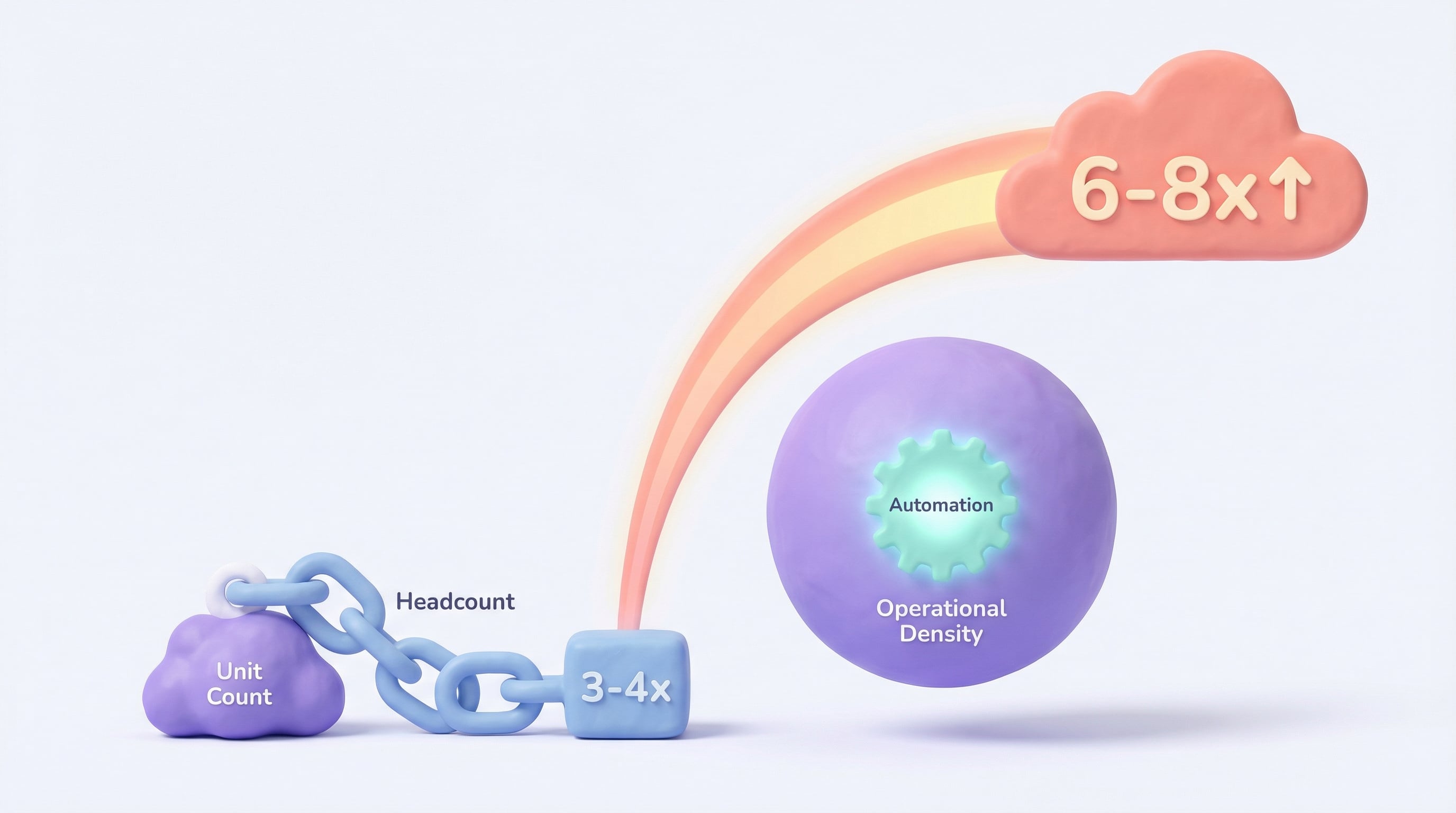
To maximize value, you must implement systems that enforce "Operational Density", the ability to manage more revenue per employee hour. This requires replacing human decision trees with automated logic.
SuiteOp acts as the infrastructure for this transition, effectively turning your Standard Operating Procedures (SOPs) into executable code. By integrating distinct operational silos into a unified dashboard, you create a verifiable data trail that proves to investors that the business runs itself.
- Risk Mitigation as an Asset: Buyers fear liability. Using SuiteMonitor to automate noise detection and party prevention turns risk management into a documented, deployable process rather than a reactive scramble.
- Standardized Quality Control: Variable cleaning quality erodes brand value. SuiteKeeper digitizes housekeeping checklists and maintenance scheduling, ensuring that brand standards are met without constant founder supervision.
- Automated Guest Validation: Manual screening is unscalable and prone to bias. SuiteVerify automates ID checks and security deposits, instantly flagging high-risk bookings before they impact the P&L.
Manual Operations vs. The Efficiency Multiple
The difference between a generic property manager and a premium acquisition target lies in the workflow. Here is how the valuation metrics shift when you automate critical paths:
- Guest Access: Manual code generation and troubleshooting → SuiteConnect automates lock codes and thermostat settings, reducing check-in support tickets by 80%.
- Guest Experience: PDF guidebooks and text threads → SuitePortal provides a self-service hub for check-in and upsells, increasing revenue per guest without increasing labor.
- Staffing Ratio: 1 staff member per 15 units → 1 staff member per 50 units using automated dispatching.
- Valuation Impact: 3-4x EBITDA multiple → 6-8x EBITDA multiple due to reproducible cash flow.
The Financial Argument for Tech Infrastructure
Private equity and strategic acquirers in the STR M&A trends of 2025 are looking for "plug-and-play" acquisitions. They want to buy a machine, not a headache. When you integrate your PMS with specialized tools through Integrations, you are building a proprietary tech stack that serves as a moat.
Rising operational costs, specifically insurance and labor, are rendering the traditional high-touch management model unsustainable. By 2025, labor costs in the hospitality sector are projected to outpace revenue growth in non-optimized portfolios. Investing in automation is not just an efficiency play; it is a defensive strategy to preserve net margins against inflationary pressures.
The path to a higher exit valuation is clear. Stop focusing solely on acquiring new units. Start focusing on increasing the operational density of the units you already have. Make the business boring, predictable, and profitable.
Ready to Automate Your Operations?See how SuiteOp transforms manual workflows into a scalable technology asset. Book a demo to see it in action.
See it running on your properties
A 30 minute demo with our team, on your own portfolio's workflows.
Frequently Asked Questions
- What drives vacation rental business valuation in 2025?
- Operational density, not unit count. Investors prioritize net margin expansion and tech-enabled scalability over gross booking volume, so your exit multiple depends on how well you decouple revenue growth from headcount growth.
- What is operational density in property management?
- Operational density is the ability to manage more revenue per employee hour. It comes from replacing human decision trees with automated logic, so each new unit adds revenue without adding proportional labor and complexity.
- What is the founder dependency discount?
- It is the valuation penalty buyers apply when a business cannot run without its founder or a key operations manager. If noise complaints, maintenance triage and guest vetting depend on personal judgment, institutional buyers treat it as key person risk, because scaling requires linear hiring.
- How does automation increase a property management company's exit multiple?
- Automation makes cash flow reproducible and transferable. Digitized SOPs for guest access, housekeeping checklists, guest verification and noise monitoring create a documented, verifiable data trail that proves to acquirers the business runs itself, which is what buyers looking for plug-and-play acquisitions pay a premium for.
- How does SuiteOp help operators build operational density?
- SuiteOp turns SOPs into executable workflows on one dashboard: SuiteConnect automates lock codes and thermostat settings, SuitePortal gives guests a self-service hub for check-in and upsells, SuiteKeeper digitizes housekeeping and maintenance checklists, SuiteVerify automates ID checks and security deposits, and SuiteMonitor automates noise detection and party prevention.