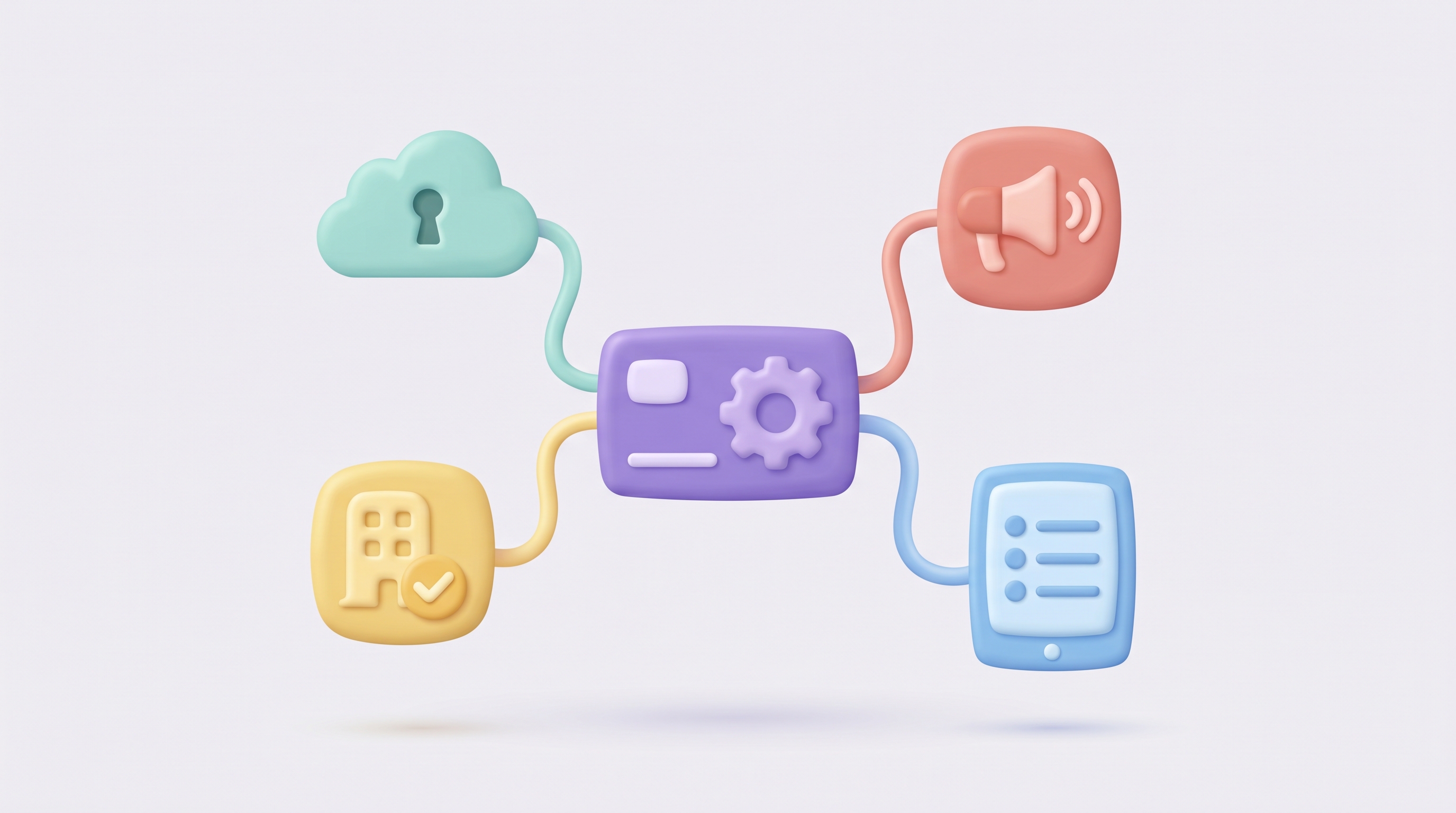
The short answer: Fragmented tech stacks are the silent killer of Net Operating Income (NOI). By moving to a unified operating system in 2026, property managers can eliminate 30% of software costs, eradicate data silos, and gain a single pane of glass for all operations.
Why Has the "Best-of-Breed" Strategy Failed?
For the last decade, the vacation rental industry chased a "best-of-breed" technology strategy. Property managers were encouraged to buy the best niche tool for every specific task: one app for noise monitoring, another for digital guidebooks, a third for cleaning schedules, and a fourth for smart locks. While this seemed logical during the venture-capital-fueled growth era, the economic reality of 2026 has exposed the flaws in this approach.
The result is what we call the "Franken-stack": a bloated collection of disconnected subscriptions that bleed revenue. You are paying for overlapping features, paying for API connections (Zapier bills add up), and paying the hidden tax of context switching. Your operations team is not managing properties; they are managing software logins.
The Financial Impact of Tech Bloat
As we analyze vacation rental software consolidation trends 2026, the financial data is clear. Efficiency is no longer optional; it is the primary driver of profitability. Two critical projections define the landscape for the coming year:
- Operational Overhead Surge: Industry forecasts indicate that operators maintaining fragmented tech stacks will face a 22% higher operational cost per unit in 2026 compared to those utilizing unified platforms. This cost comes from direct subscription fees and the labor hours lost to manual data transfer.
- The Consolidation Migration: By the end of 2026, it is projected that 40% of mid-to-large property managers will actively consolidate their tech vendors, prioritizing "all-in-one" operating systems to protect their margins against softening ADRs (Average Daily Rates).
The Unified Operating System: A CFO's Perspective
Reducing STR technology costs requires a fundamental shift in how we view the tech stack. It is not about finding a cheaper version of each tool; it is about eliminating entire categories of expense by leveraging a Unified Operating System.
This is where SuiteOp acts as the Great Consolidator. Instead of patching together five different SaaS bills, you deploy a single infrastructure that handles the entire guest and property lifecycle.
Consider the capital efficiency of this consolidation:
- Eliminate Standalone Hardware Costs: Instead of a separate noise monitoring subscription, SuiteMonitor integrates noise control directly into your operations dashboard.
- Remove Third-Party Vetting Fees: Rather than paying per-check for an external screening tool, SuiteVerify handles ID verification and screenings natively, syncing risk data instantly with access codes.
- Drop the Guidebook Subscription: You do not need a standalone guest app. SuitePortal provides the digital guest experience and upsell capabilities without an extra monthly fee.
Solving the Data Silo Crisis
Beyond the direct P&L savings, a unified platform solves the operational paralysis caused by data silos. When your smart locks, cleaning software, and guest messaging live in different worlds, automation breaks. A late checkout purchased in a guest app often fails to notify the cleaner in the scheduling app, leading to clashes and refunds.
With a unified approach, data flows fluidly. When a guest extends their stay via the portal, SuiteConnect automatically extends their smart lock code, and SuiteKeeper instantly reschedules the cleaning team. No human intervention is required, and no data is lost in translation.
Fragmented Stack vs. Unified Operating System
The operational difference is stark when you compare the workflows side-by-side.
- Access Control: Manual code generation and emailed PDFs → SuiteConnect automates code creation and expiration based on real-time reservation data.
- Guest Verification: Chasing guests for ID photos via email → SuiteVerify automates the entire risk assessment and deposit collection before check-in instructions are released.
- Maintenance dispatch: Copy-pasting messages to a task manager → SuiteOp triggers work orders automatically based on sensor alerts or guest reports.
- Tech Spend: 5+ separate invoices and varying contract dates → One consolidated vendor relationship.
Strategic Positioning for 2026
The winners in 2026 will not be the operators with the most apps; they will be the operators with the most efficient margins. By consolidating your operations into a single pane of glass, you recover the hours your team currently spends toggling between tabs. More importantly, you recover the recurring revenue currently leaking out to redundant SaaS providers.
For those needing to connect specific legacy tools, our Integrations ensure you can still bridge the gap without maintaining a dozen disparate systems. However, the trajectory is clear: consolidation is the new standard for scalability.
Ready to Automate Your Operations?See how SuiteOp handles unification automatically. Book a demo to see it in action.
See it running on your properties
A 30 minute demo with our team, on your own portfolio's workflows.