






.png)



How Enterprise STR Operators Scale in 2026 Despite Residential Zoning Bans
Enterprise STR operators are bypassing residential zoning bans by converting distressed commercial properties into tech-enabled micro-boutique hotels, using automation to eliminate front-desk labor while maintaining scalability through protected commercial zoning status.
ON THIS PAGE
- 01Why Will Residential Zoning Caps Strangle Traditional Portfolios in 2026?
- 02How Does the STR Adaptive Reuse Strategy Solve the Growth Problem?
- 03What Are the Operational Risks of Mixed Asset Class Portfolios?
- 04How Do You Automate a Micro-Boutique Hotel Without a Front Desk?
- 05Why Must Operators Adopt Centralized Task Dispatch for Commercial Units?
- 06How Do Consolidated Systems Future-Proof Your Hospitality Brand?
The short answer: In 2026, enterprise STR operators are overcoming residential zoning bans through commercial adaptive reuse by converting distressed multi-unit properties into tech-enabled micro-boutique hotels. This strategy ensures STR scalability by utilizing commercial zoning, relying on automated operations to eliminate front-desk labor costs and bypass residential regulatory caps completely.
Why Will Residential Zoning Caps Strangle Traditional Portfolios in 2026?
The golden era of limitless single-family residential arbitrage has officially ended. Property Management Company (PMC) CEOs and enterprise founders are facing a regulatory environment that systematically caps growth. Municipalities are no longer just exploring short-term rental rules. They are implementing aggressive, highly restrictive zoning bans that freeze portfolio expansion in its tracks.
The Anatomy of a Modern Municipal Crackdown
Urban planners and city councils across major tourist destinations have shifted their focus from taxation to strict density control. The driving force is clear. Local governments are under immense pressure to return housing stock to long-term residents. Instead of managing short-term rentals through hotel taxes, authorities are explicitly banning un-hosted rentals in residential zones.
Recent reports highlight this drastic legislative shift. A comprehensive analysis on short-term rental laws in 2025 indicates that property managers must navigate an increasingly hostile environment where licensing is either permanently capped or subject to impossible lottery systems. For an enterprise operator built on aggressive year-over-year unit growth, a frozen license pool is an existential threat.
Furthermore, enforcement mechanisms have matured. Cities are no longer relying on neighbor complaints to identify illegal listings. They deploy advanced data scraping tools to cross-reference booking platforms against municipal tax records. The financial penalties for non-compliance now scale into the tens of thousands of dollars per violation. The strict regulations recently documented in the Houston Short-Term Rental Ordinance showcase how cities are establishing rigid registration frameworks, hefty fees, and immediate revocation clauses for noise or occupancy violations.
Why Grandfather Clauses Offer False Hope
Many operators mistakenly believe that securing early licenses will protect their portfolio long-term. However, a major 2026 outlook on regulation trends points to the fragility of grandfather clauses. When a property changes ownership, the license frequently expires. If a localized zoning update passes, existing properties may be forced into an amortization period where they must cease operations within three years.
For an enterprise PMC attempting to secure venture capital or favorable debt financing, this lack of asset permanence is a dealbreaker. You cannot project ten-year revenue models when the underlying asset could be legislated out of existence next quarter. Traditional residential STR scalability is dead, forcing ambitious operators to look toward commercial real estate for survival.
How Does the STR Adaptive Reuse Strategy Solve the Growth Problem?
To maintain aggressive growth targets, enterprise operators are pivoting to the STR adaptive reuse strategy. This involves acquiring distressed commercial properties like aging motels, vacant office floors, or mixed-use retail spaces, and converting them into micro-boutique hotels. Because these assets sit in commercially zoned districts, they enjoy protected hospitality status. The threat of a residential zoning ban vanishes instantly.
Defining the Micro-Boutique Hotel Asset Class
A micro-boutique hotel typically consists of ten to forty units. Historically, these properties were ignored by large hotel brands because they lacked the unit count to justify standard operational overhead. You simply cannot support a restaurant, a concierge desk, and full-time management on the revenue of twenty rooms.
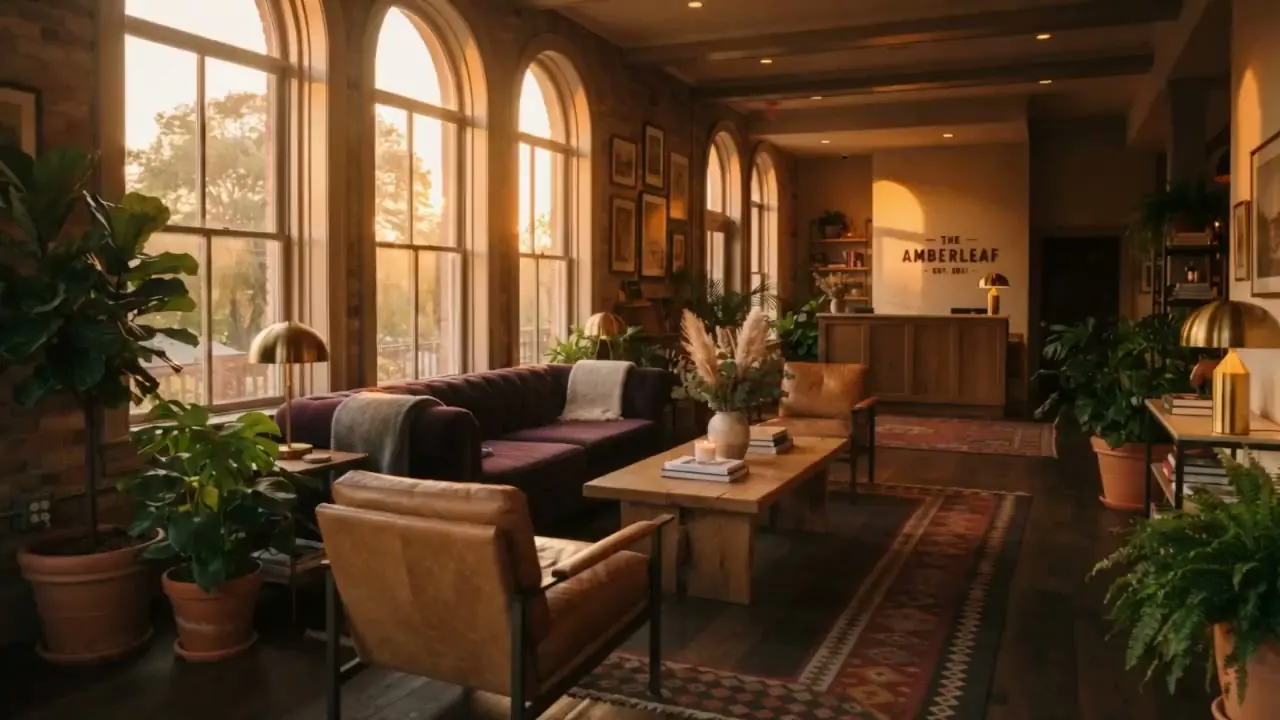
However, modern STR operators view these assets differently. By applying residential vacation rental logic to commercial assets, operators can strip out the communal amenities, eliminate the front desk, and focus purely on high-design guest rooms. This hybrid model captures the premium daily rates of a boutique hotel while maintaining the lean operating costs of a short-term rental.
Trend Trajectory: Residential vs. Commercial Adaptive Reuse
- Growth Potential: Residential portfolios are capped by municipal licensing limits and neighborhood density rules. Commercial zoning offers unlimited scalability per building with protected legal status.
- Zoning Risk: Residential assets face immediate bans or strict stay-length minimums mandated by city councils. Commercial assets enjoy protected hospitality status immune to housing shortage legislation.
- Operating Overhead: Residential management requires scattered field agents driving across the city. Commercial management concentrates maintenance and housekeeping logistics into a single location.
- Yield Structure: Residential arbitrage relies on thin margins and single-door economics. Commercial reuse enables multi-unit economies of scale with centralized utility tracking and bulk vendor pricing.
The math heavily favors commercial assets. Purchasing twenty single-family homes involves twenty separate roofs, twenty distinct HVAC systems, and twenty unpredictable neighborhood associations. Purchasing a twenty-unit commercial property centralizes the infrastructure. When paired with the right technology, the profit margins expand dramatically.
What Are the Operational Risks of Mixed Asset Class Portfolios?
The transition from pure residential to mixed-asset portfolios introduces severe operational fragmentation. Property Management Company CEOs quickly discover that running fifty scattered single-family homes requires a completely different operational muscle than running a centralized thirty-unit motel.
The Margin Killer: Traditional Hospitality Staffing
The most immediate risk in commercial acquisitions is the assumption that you must staff the property like a traditional hotel. Operating a physical front desk 24 hours a day requires a minimum of four full-time equivalent employees to cover shifts, weekends, and holidays. Factoring in wages, benefits, turnover, and training, a basic front desk operation can easily cost $150,000 annually.
If you are operating a twenty-unit micro-boutique hotel with an average daily rate of $150 at seventy percent occupancy, your gross annual revenue hovers around $766,000. Siphoning $150,000 off the top simply to hand out keys and answer basic questions destroys the financial viability of the asset. The overhead cost of staffing commercial properties is prohibitive, demanding a completely automated approach.
The Software Silo Problem
The secondary risk is technological fragmentation. Most operators attempt to manage this new commercial asset using the same fragmented tools they used for their residential portfolio. They use one application for residential guest messaging, a different standalone system for commercial door locks, a third application for housekeeping, and a rudimentary form for collecting security deposits.
This creates an operational nightmare. When a guest books a room in the micro-hotel, the reservation data must manually pass through three different software environments before the guest receives an access code. If the guest requests an early check-in, the housekeeping software does not communicate with the smart lock software, resulting in locked-out guests and frustrated staff.
Enterprise STR scalability requires a unified infrastructure. To manage mixed asset classes efficiently, operators need a single operating system that bridges the gap between scattered residential properties and centralized commercial units.
How Do You Automate a Micro-Boutique Hotel Without a Front Desk?
The solution to the commercial overhead problem is invisible service hotel operations. Invisible service relies on technology to handle every aspect of the guest journey, completely removing the need for on-site staff while actually improving the guest experience. SuiteOp serves as the ultimate enterprise management bridge, allowing operators to run both residential STRs and commercial micro-hotels on a single, unified operating system.
Pre-Arrival Security and Identity Verification
Operating without a front desk means you do not have a physical clerk to check IDs or swipe credit cards for incidentals. In a commercial environment, failing to verify guests leads to unauthorized parties, property damage, and severe liability.
Operators solve this by automating the pre-arrival phase. As soon as a reservation is confirmed, the guest receives an automated prompt to complete their digital check-in. By utilizing SuiteOp, operators seamlessly collect government-issued identification, process biometric facial recognition, and secure digital rental agreements. The system also places a customized hold on the guest credit card for a security deposit.
If a guest refuses to complete the verification or fails the biometric check, the automated system flags the reservation for internal review. The entry codes are never generated. This proactive defense mechanism prevents problem guests from ever accessing the commercial property, entirely replacing the traditional front desk security checkpoint.
Touchless Access and Smart Energy Management
The cornerstone of invisible service is flawless physical access. Commercial properties typically have complex entry requirements involving main lobby doors, elevator access, and individual room locks. Coordinating physical keys or manually generating codes for dozens of arrivals daily is impossible without automation.
Through SuiteOp, the entire access journey is automated. Once the guest successfully passes the verification stage, the system generates unique, time-bound access codes that activate exactly at check-in time and expire at check-out. These codes can be programmed to work on the exterior building doors and the specific guest room simultaneously.
Furthermore, commercial properties consume massive amounts of energy. Empty rooms with running air conditioning destroy profit margins. Connected hardware allows operators to link thermostat controls to reservation status. When the guest checks out, the system automatically adjusts the climate control to an energy-saving baseline. The physical infrastructure of the building responds intelligently to reservation data.
Digital Concierge Services and Upsell Revenue
Without a front desk clerk to recommend local restaurants or offer room upgrades, operators risk losing critical ancillary revenue. Today's travelers expect instant gratification and digital self-service. They do not want to call a phone number to request a late check-out.
Operators implement a digital interface to replace the human concierge. Using SuiteOp, guests receive a branded, customized web application detailing everything they need for their stay. The portal contains automated Wi-Fi credentials, digital property guides, and interactive neighborhood maps.
More importantly, the portal serves as an automated sales engine. Guests can browse and purchase upgrades directly from their smartphones. If a guest wants to extend their stay by two hours, they select the option, the credit card on file is charged, the smart lock access time is automatically extended, and housekeeping schedules are instantly updated. This seamless, zero-touch transaction generates pure profit without requiring a single minute of staff labor.
Why Must Operators Adopt Centralized Task Dispatch for Commercial Units?
Managing the guest journey is only half the equation. The physical maintenance of a micro-boutique hotel requires intense logistical coordination. Cleaning a twenty-unit commercial building presents fundamentally different challenges than cleaning scattered single-family homes.
Unifying Housekeeping Logistics Across Zones
In a residential portfolio, cleaners spend a significant portion of their day driving between neighborhoods. In a commercial micro-hotel, the geographical challenge disappears, but the volume challenge intensifies. You might have fifteen rooms turning over on the same morning within the same building. Relying on manual spreadsheets or basic calendar apps guarantees missed cleans, delayed check-ins, and negative reviews.
Enterprise operators require automated, rule-based dispatching. By implementing SuiteOp, the operations team can automate the entire back-of-house workflow. The system reads the reservation data and automatically assigns cleaning tasks to specific team members based on location, room size, and availability.
Cleaners access digital checklists tailored to the specific room type. They are required to upload photo evidence of the cleaned room, ensuring quality control without needing a manager on site. If a guest purchases a late check-out via the guest portal, the housekeeping schedule automatically shifts in real-time, preventing cleaners from walking in on resting guests.
Predictive Maintenance and Asset Protection
Commercial properties require vigilant monitoring to protect the physical asset. In a multi-unit environment, a noise violation in room 204 directly impacts the guest experience in rooms 203 and 205. Without on-site staff patrolling the hallways, operators need digital ears to maintain order.
Deploying SuiteOp provides oversight of noise levels across the entire building. The privacy-safe sensors detect sustained decibel spikes indicative of unauthorized gatherings. When a threshold is breached, the system automatically triggers an SMS warning to the guest.
This automated escalation process resolves the vast majority of noise incidents without human intervention. By the time a neighboring guest considers complaining, the issue has already been detected, addressed, and documented. This proactive approach protects the operator from regulatory fines, neighborhood disputes, and expensive property damage.
How Do Consolidated Systems Future-Proof Your Hospitality Brand?
The shift toward micro-boutique hotels is not a temporary trend. It is a permanent restructuring of the short-term rental market driven by unyielding regulatory pressure. Residential zoning bans will continue to aggressively cap traditional growth, forcing serious operators into the commercial space. Those who attempt to manage these new assets with outdated, fragmented processes will fail under the weight of manual labor costs.
Building an Unbreakable Tech Stack
Future-proofing an enterprise operation demands a consolidated technology stack. Operators must move away from patching together disconnected applications and adopt a comprehensive operating system that natively understands the complexities of mixed-asset portfolios.
When you rely on robust Integrations, your property management software communicates flawlessly with your physical locks, your verification engine, and your task dispatch system. The data flows bi-directionally. A booking modification immediately updates the smart lock code, adjusts the cleaning schedule, and updates the digital guest portal without a single manual click.
This level of automation creates a highly defensible business moat. By reducing front desk labor to zero and maximizing ancillary revenue through automated upsells, enterprise operators can confidently acquire distressed commercial properties. They can aggressively scale their door count knowing their operating system will handle the complex logistics invisibly and flawlessly.
The operators who thrive in 2026 will not be the ones fighting losing battles against residential city councils. They will be the ones who adapt their real estate strategy, embrace commercial zoning, and deploy sophisticated automation to run invisible service hotels at maximum profitability.
Ready to Automate Your Operations?
See how SuiteOp handles complex mixed-asset portfolios and invisible service hotel operations automatically. Book a demo to see it in action.
Frequently asked questions
How do residential zoning bans affect STR portfolio growth in 2026?
Residential zoning bans systematically cap STR portfolio growth by limiting or completely prohibiting unhosted short-term rentals in residential zones. Municipalities now implement aggressive density controls, permanent licensing caps, and lottery systems that freeze expansion. Cities deploy advanced data scraping to cross-reference listings against tax records, with penalties scaling into tens of thousands per violation. Grandfather clauses offer limited protection because licenses often expire when properties change ownership or when zoning updates pass. For enterprise operators projecting ten-year revenue models or seeking venture capital, this regulatory uncertainty makes traditional residential STR assets financially unstable and impossible to scale.
What is the STR adaptive reuse strategy for commercial properties?
The STR adaptive reuse strategy involves acquiring distressed commercial properties like aging motels, vacant office floors, or mixed-use retail spaces and converting them into micro-boutique hotels with ten to forty units. Because these assets sit in commercially zoned districts, they enjoy protected hospitality status immune to residential rental bans. Operators apply vacation rental operational logic by eliminating traditional hotel amenities like restaurants and front desks, focusing purely on high-design guest rooms. This hybrid model captures premium boutique hotel daily rates while maintaining lean STR operating costs. The strategy offers unlimited scalability per building with centralized infrastructure, eliminating the fragmentation of managing scattered single-family homes across neighborhoods.
How does SuiteOp automate micro-boutique hotel operations without a front desk?
SuiteOp enables invisible service hotel operations through a unified platform that automates the entire guest journey. SuiteOp handles pre-arrival security by collecting government IDs, processing biometric facial recognition, and securing digital rental agreements with automated security deposit holds. SuiteOp manages touchless access by generating unique time-bound codes for building entries and room locks that activate at check-in and expire at check-out, while also linking thermostats to reservation status for energy management. SuiteOp provides a branded digital concierge where guests access WiFi credentials, property guides, and purchase upgrades like late checkout that automatically update lock codes and housekeeping schedules. Operations coordinate cleaning teams with automated task dispatch and digital checklists, while Monitoring flags noise violations against your thresholds. This eliminates the $150,000 annual cost of traditional front-desk staffing.
What are the operational risks of managing mixed residential and commercial STR portfolios?
Mixed-asset portfolios create severe operational fragmentation because residential and commercial properties require fundamentally different management approaches. The primary risk is margin destruction through traditional hospitality staffing. A 24-hour front desk requires four full-time employees costing $150,000 annually, which devastates profitability on a twenty-unit property generating $766,000 in gross revenue. The secondary risk is technological fragmentation from using different systems for messaging, locks, housekeeping, and deposits across property types. This creates manual data transfer bottlenecks, communication failures between systems, and operational breakdowns like guests being locked out when early check-in requests do not sync between housekeeping and access control software. Enterprise scalability demands a unified operating system that natively handles both scattered residential units and centralized commercial buildings.
Does SuiteOp integrate with existing property management systems and smart locks?
Yes, SuiteOp provides comprehensive integrations that allow the platform to communicate flawlessly with property management software, physical smart locks, verification engines, and task dispatch systems. The data flows bi-directionally, meaning a booking modification immediately updates smart lock codes, adjusts cleaning schedules, and refreshes the digital guest portal without manual intervention. SuiteOp specifically handles device integrations for complex commercial properties with multiple entry points including lobby doors, elevator access, and individual room locks. This consolidated technology stack eliminates the software silo problem where operators patch together disconnected applications. By centralizing all operational data and automation triggers, SuiteOp creates the unbreakable tech stack required for managing mixed-asset portfolios at enterprise scale.
How do automated upsells generate revenue in micro-boutique hotels without staff?
Automated upsells through SuiteOp function as a zero-touch sales engine that replaces traditional front-desk revenue generation. Guests access a branded web application on their smartphones where they can browse and instantly purchase upgrades like late checkout, early check-in, parking passes, or amenity packages. When a guest selects an upgrade, the system automatically charges the card on file, extends smart lock access times, updates housekeeping schedules in SuiteOp, and confirms the transaction, all without human intervention. This seamless self-service approach captures ancillary revenue that would otherwise require dedicated concierge staff, generating pure profit while actually improving guest experience through instant gratification. The digital interface operates 24/7 and scales across unlimited units without additional labor costs.