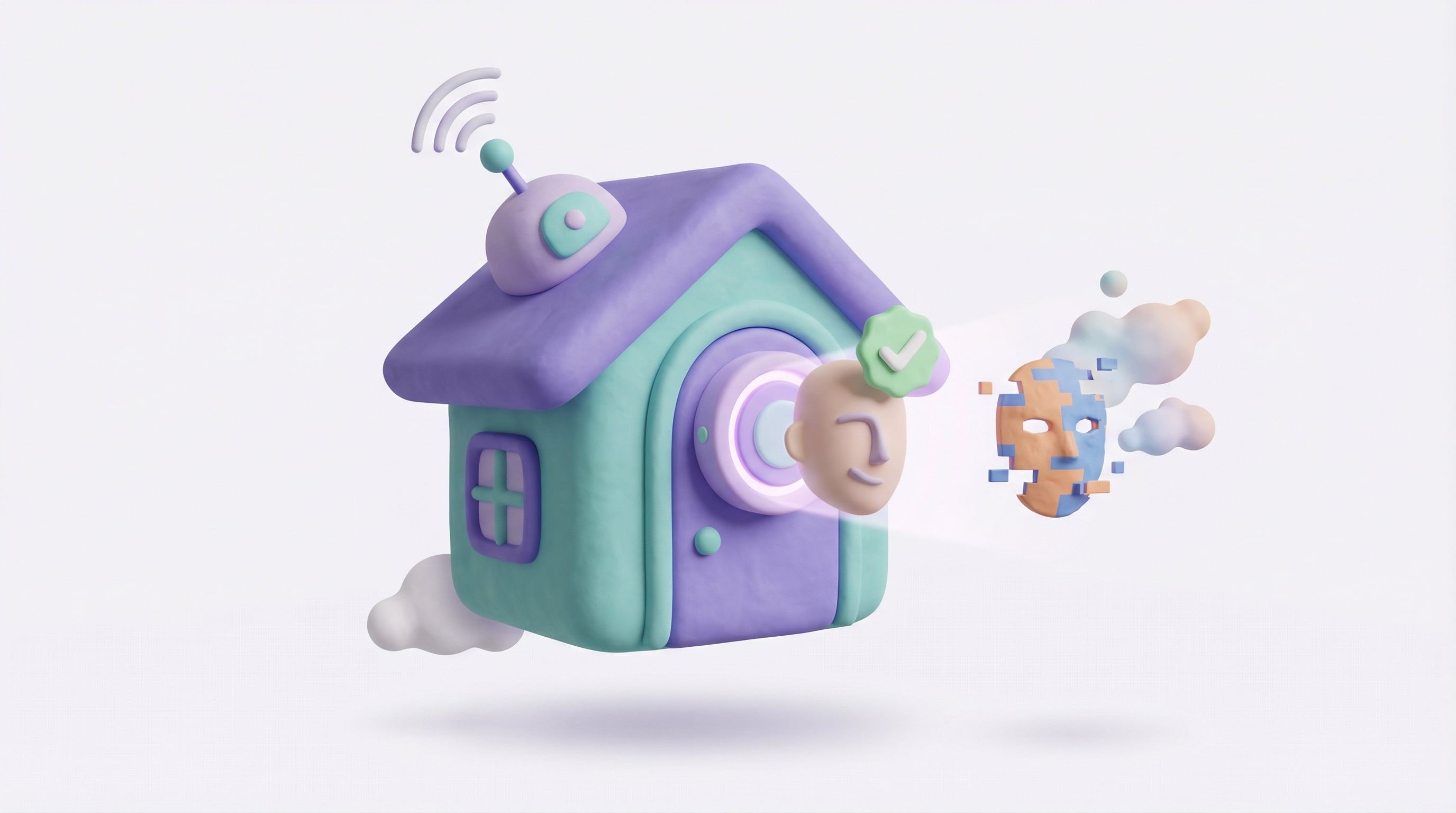

The short answer: The most effective AI phone answering for property managers isn't just about voice recognition; it is about the "Digital Handoff." By combining AI agents like Allo or Conduit with a visual platform like SuitePortal, property managers move the repetitive share of guest calls out of the phone queue entirely. Contact-center research firm DB Kay & Associates puts a well-run self-service deflection program at 20 to 40 percent for most organizations, with high performers reaching 50 percent or higher, and Verizon's own deflection rate reportedly climbed to 85 percent after it built out self-service capabilities, according to deflection benchmarking published by Balto.ai. The same mechanism applies once an AI agent verifies a guest and hands them a deep link instead of trying to solve the problem out loud: the guest gets a visual answer, and the phone call ends in under a minute instead of five.
The Broken Promise of Traditional Call Centers
For years, operations managers faced a binary choice for handling 24/7 guest inquiries: burnout internal staff with after-hours calls or pay for an outsourced call center. Neither solution is ideal in 2026.
Internal teams struggle with volume spikes, leading to missed calls and frustrated guests. Outsourced humans, while available, often lack specific property knowledge. They might read from a generic script, but they cannot see the thermostat the guest is struggling with. This disconnect creates a "Trust Gap" where the guest feels the person on the phone has never actually stepped foot in the property.
The data on what guests actually ask about backs this up. Touchstay's analysis of 37,359 guest chatbot conversations across active vacation rentals over a six-month period found that WiFi was the single most-asked question in the entire dataset, with guests asking within minutes of arrival, and check-in questions close behind at 3,822 instances. Neither of those is a complex question. Both are low-complexity, high-urgency, and guests ask them because they want an answer immediately, not because they want to talk to a person. Canary Technologies' hospitality research puts a number on what happens when those calls go unhandled: 40 percent of calls to hotel front desks go unanswered, according to the company's VP of Product Aman Shahi, and about a third of the missed calls were booking-related, meaning real revenue sitting on the other end of an unanswered ring. These low-complexity, high-urgency questions are solved inefficiently by human agents and poorly by an unanswered phone. The answer involves a new tiered architecture: AI Voice for Triage, and SuitePortal for Resolution.
The Deflection Funnel: How Calls Actually Get Resolved
"Deflection funnel" sounds abstract until it's broken into the three tiers property managers actually deal with on a given day.
Tier 1 is informational and belongs to self-service entirely. WiFi passwords, check-in codes, parking instructions, appliance basics. These are the questions Touchstay's guest-conversation data shows arriving most often, and they carry no ambiguity: there is one correct answer, and it doesn't change based on who's asking. This tier should never reach a human, and ideally shouldn't consume more than a few seconds of an AI agent's time either, since the goal is a text with a link, not a conversation.
Tier 2 needs identity or context before it can be answered, but still doesn't need a person. "Can I get an early check-in?" depends on whether the previous guest has checked out and whether the unit's been cleaned. "Why isn't the door code working?" depends on whether the reservation window has actually started. This is where AI agents like Conduit earn their cost: pulling live reservation and PMS data mid-call to answer correctly instead of generically, then handing the guest to SuitePortal for anything that has a visual component, like showing exactly where a smart lock's keypad is.
Tier 3 is everything that needs a human, and it should be a small, well-defined slice of total volume. Safety issues, disputes, refund requests, and any guest who is already upset. Good AI phone tools are explicitly built to recognize this tier and escalate rather than attempt an answer; the risk with early, unstructured AI deployments isn't that they handle Tier 1 questions poorly, it's that they try to handle Tier 3 questions at all.
The property managers getting real call-volume relief from this funnel aren't the ones with the most sophisticated AI voice agent. They're the ones who built a genuinely useful Tier 1 destination, so the funnel has somewhere good to send guests, and drew a clear, conservative line around what escalates to Tier 3.
The 2026 Benchmark: Allo vs. Conduit vs. Aloware vs. EliseAI vs. AnswerForce
Choosing the right AI agent depends on your specific operational challenges. Five contenders worth knowing are analyzed below, three built specifically for short-term rental automation and two worth understanding by contrast: one built for a different property type, and one representing the traditional live-agent alternative.
1. Allo (WithAllo): The Pure Specialist
Allo focuses intensely on the "AI Receptionist" experience. It is designed specifically for hospitality, meaning its natural language processing (NLP) is pre-trained on terms like "late check-out," "access code," and "pool heat."
Best for: Managers who want a "set it and forget it" replacement for an after-hours answering service. It handles the conversation naturally but relies heavily on the data you feed it.
2. Conduit: The Operational Brain
Conduit distinguishes itself with deep PMS integrations and a "Copilot" feature. It does not just chat; it pulls real-time reservation data to validate the caller before answering specific questions. If a guest calls from an unrecognized number, Conduit can challenge them for verification details before releasing sensitive info.
Best for: High-volume operators who need the AI to take action (like creating a maintenance ticket) rather than just answering questions.
3. Aloware: The Contact Center Powerhouse
Aloware is fundamentally a contact center software that has layered AI on top. Its strength lies in its routing capabilities and sales features. If you manage mixed portfolios (long-term and short-term) or have a sales team handling booking inquiries, Aloware offers robust dialer and CRM features alongside its AI answering.
Best for: Teams that need to blend AI automation with complex human routing and lead management.
4. EliseAI: The Multifamily Specialist Worth Knowing
EliseAI isn't built for short-term rentals, it's built for multifamily leasing and, more recently, healthcare front desks, and it's worth including here precisely because of how far AI phone answering has scaled in an adjacent property category. Forbes reported in June 2026 that EliseAI's tools handle 1.5 million texts, emails, and phone calls a year, are used by roughly one in six U.S. apartments and 90 percent of the country's largest property managers, and helped one large operator, Equity Residential, save $20 million in payroll costs. EliseAI supports voice in seven languages and written responses in 51, according to its own published capabilities. None of this transfers directly to a vacation-rental operation, the workflows (leasing tours, renewals, maintenance triage) are different from a guest's stay-specific questions, but it's a useful data point on how much phone volume AI answering can realistically absorb once a property category standardizes on it.
Best for: Understanding what AI phone answering looks like at scale in an adjacent vertical; not a direct fit for short-term rental or boutique hospitality operators.
5. AnswerForce: The Traditional Alternative
AnswerForce represents the option property managers have relied on for decades before AI voice agents existed: a live, human answering service. Founded in 2003 and based in Portland, Oregon, AnswerForce staffs real receptionists, not bots, available 24/7, with bilingual English and Spanish support and month-to-month plans priced from $50 to $1,000 depending on call volume. It's a legitimate choice for an operator who wants guaranteed human coverage on every call and is comfortable with per-call or per-minute pricing that scales with volume. What it doesn't solve is the resolution problem: a live receptionist at a call center has never seen the property, can't see the guest's confusion over a specific thermostat model, and is working from the same generic script whether the caller is asking about WiFi or reporting a real emergency.
Best for: Operators who prioritize guaranteed live human coverage over cost efficiency or visual resolution, and who don't yet have infrastructure like a guest portal for AI agents to hand callers off to.
The Missing Link: Mastering the "Digital Handoff"
Voice AI handles the triage effectively, but it often fails at resolution. Explaining how to reset a router over the phone is painful for both the AI and the guest. This is where the "Digital Handoff" becomes critical.
The goal is to move the guest from a low-bandwidth channel (voice) to a high-bandwidth channel (visual interface). This is where SuiteOp acts as the solution layer.
How the Workflow Functions
- Triage (Voice Layer): The guest calls asking, "How do I turn on the hot tub?"
- Identification: The AI (Conduit/Allo) recognizes the guest via their phone number and reservation data.
- The Handoff: Instead of reading a 5-minute manual over the phone, the AI says: "I have identified your reservation. I am sending a secure link to your phone with the visual guide for the hot tub."
- Resolution (Visual Layer): The guest receives an SMS deep link to the specific module in SuitePortal. They see a photo of the controls and step-by-step instructions.
This workflow shortens the call itself, since the AI only needs to verify the guest and send a link rather than talk them through a multi-step process, and it improves guest satisfaction for a more durable reason: the guest keeps a persistent resource they can return to for the rest of the stay, instead of a five-minute phone call whose details are forgotten the moment they hang up.
What to Automate First (And What Still Needs a Human)
Not every property manager should try to automate everything at once, and the sequencing matters more than most AI phone answering rollouts acknowledge.
Start with the highest-volume, lowest-ambiguity questions. Per Touchstay's guest-conversation data, that's WiFi and check-in information: the answer never changes, there's no judgment call involved, and it's the fastest win for proving the deflection funnel works before expanding it. Point the AI agent's default response for these intents straight at the relevant SuitePortal page, not a verbal explanation.
Add device and access questions next. "How do I turn on the hot tub" and "why isn't my door code working" both need a visual answer (a labeled photo of a control panel, a live status check on a smart lock) that a voice channel genuinely cannot deliver well. This is where pairing the AI agent with SuiteConnect's device data becomes useful: the agent can confirm a lock is functioning correctly before sending the guest to a troubleshooting guide, cutting down on "it's still not working" callbacks.
Handle noise and disturbance reports with a hybrid approach. A neighbor complaint or an automated noise alert from a tool like SuiteMonitor shouldn't wait for a phone call at all; proactive detection catches many of these before a guest or neighbor ever has to dial in. When a call does come in about noise, it typically needs a person, since it usually involves judgment about whether to intervene.
Leave three categories to humans, full stop. Safety and emergency situations. Anything involving a dispute over money, a refund, or a damage claim. And any guest who's already frustrated enough that the tone of the response matters more than the accuracy of the information. Automating these isn't a cost-savings opportunity, it's a guest-experience risk, and the property managers who get the most out of AI phone answering are the ones who are strict about keeping this list short and non-negotiable rather than trying to shrink it over time.
Comparing the Approaches
Property managers evaluating how to handle guest calls are really choosing between three approaches: a digital handoff built on SuitePortal, a standalone AI phone answering service, or a traditional live-agent call center. Ranked by how completely each one solves both the answering problem and the resolution problem:
- AI phone answering paired with a SuitePortal digital handoff. The AI agent triages and verifies the guest; SuitePortal actually resolves the question with a visual, persistent resource the guest can return to. This is the only approach of the three that closes the loop on both triage and resolution.
- Standalone AI phone answering services. Tools like Allo, Conduit, or Aloware answer calls reliably around the clock and can verify guests against reservation data, but without a visual handoff destination, they're still limited to a spoken explanation for problems that are inherently visual, like showing a guest where a lockbox is.
- Traditional call centers and live answering services. Services like AnswerForce guarantee a human on every call, but at the highest per-interaction cost of the three, and with no property-specific visual context: the agent has never seen the unit and is working from a generic script.
How the three approaches stack up
- Core function: the SuitePortal handoff is a self-service resolution layer guests land on after triage; AI answering services handle voice triage, guest verification, and the conversation itself; a traditional call center answers live with a human.
- Cost structure: the handoff is flat-rate, included in SuiteOp's per-unit pricing with no per-call metering; AI services price per seat or usage, with Aloware publishing plans from $30 per agent per month; AnswerForce publishes monthly plans from $50 to $1,000 by call volume.
- Setup time: portal content takes minutes to hours per unit using information the operator already has; AI vendors publish estimates of one to two weeks for standard deployments and up to eight to fourteen weeks for complex custom builds; call centers set up in days but scripts need ongoing manual rewriting as properties change.
- Guest verification: the portal ties to the reservation data the guest already provided at booking; verification depth varies by AI vendor, with Conduit pulling live PMS data mid-call; a live agent simply asks the caller to self-identify.
- Multilingual coverage: SuitePortal is multi-language and mobile-first by default; AI vendors vary widely, with EliseAI supporting voice in 7 languages and text in 51 per its own specs; traditional services are typically English-first with limited bilingual support.
- After-hours availability: the portal is always on with no staffing dependency; AI agents run 24/7 when deployed for it; call centers cover nights and weekends but usually at a price premium.
- Visual resolution: only the portal can show photos, step-by-step guides, and device status; both phone-based approaches are limited to verbal description.
- Persistence: the guest can return to the portal anytime for the rest of the stay; nothing persists after a call ends on either phone-based approach.
Why Visual Context Wins
Voice agents are powerful, but they cannot show a guest where the lockbox is hidden or how to operate a European washing machine. By forcing the AI to attempt these explanations verbally, you risk hallucination or miscommunication.
By using the AI strictly for intake and routing, and relying on SuiteOp for the actual information delivery, you create a system that is both scalable and accurate. The AI becomes the concierge that hands the guest the manual, rather than trying to memorize it.
The Cost Math: Why Deflection Beats Staffing Up
The instinct when call volume grows is to add headcount or upgrade to a bigger outsourced call center plan. The unit economics point the other way.
Retell AI, an AI voice platform vendor, publishes its own cost analysis putting a routine outsourced human-agent call at $3 to $7, versus $0.28 to $0.60 for the same call handled by an AI voice agent, a 90 to 95 percent reduction; these are Retell AI's own vendor estimates, not independently audited, but they're directionally consistent with Gartner's broader projection that conversational AI will cut contact-center agent labor costs by $80 billion in 2026. Live answering services price on the other end of that range: AnswerForce's published plans run $50 to $1,000 a month depending on call volume, and that cost climbs with every additional call, whether it's a genuine emergency or a guest who lost the WiFi password again.
A digital handoff breaks that relationship between volume and cost. Once SuitePortal content exists for a unit, a guest visiting it for the twentieth time costs the same as the first: nothing metered, no per-interaction bill. SuiteOp's pricing is flat-rate per unit rather than tied to call volume, which means a portfolio's busiest, highest-question weekend doesn't produce a bigger invoice the way it would with per-minute call center billing.
There's a second, easy-to-miss economic argument for building the portal side out well: it's also SuiteOp's mechanism for guest upsells, generating $75 or more per guest for operators who use it for revenue, not just information. A property manager who builds a genuinely useful SuitePortal isn't only cutting call volume, they're building the same infrastructure that drives incremental revenue per stay. Zendesk's research on self-service preference backs up why this works: 67 percent of customers prefer self-service over speaking to a company representative when given the choice, which means a well-built portal isn't a compromise guests tolerate, it's frequently what they'd have picked anyway. Mews' 2025 survey of 2,000 U.S. travelers, conducted by Talker Research, found a similar pattern in hospitality specifically: 70 percent of travelers said they'd likely use an app or kiosk instead of the front desk, rising to 82 percent among Gen Z guests.
Ready to Automate Your Operations?
See how SuiteOp integrates with AI tools to handle guest inquiries automatically. Book a demo to see the Digital Handoff in action.
See it running on your properties
A 30 minute demo with our team, on your own portfolio's workflows.
Frequently Asked Questions
- What is the best AI phone answering for property managers?
- There isn't a single "best" AI phone answering tool independent of what happens after the call connects. Allo (WithAllo) is built specifically for hospitality vocabulary like "late check-out" or "pool heat" and is a strong fit for operators who want a straightforward after-hours answering replacement. Conduit (formerly HostAI) goes further by pulling live reservation data mid-call to verify the guest and take action, such as opening a maintenance ticket, which makes it a better fit for higher-volume operators. Aloware is a full contact-center platform with AI layered on top, useful for portfolios that mix long-term and short-term units and need dialer and CRM features alongside the AI. EliseAI is worth knowing even though it's built primarily for multifamily leasing and healthcare front desks rather than short-term rentals; Forbes reports its tools handle 1.5 million texts, emails, and phone calls a year and are used by roughly one in six U.S. apartments. The honest answer is that the "best" AI phone answering tool is whichever one is paired with a self-service resolution layer, because voice AI alone still leaves the guest with only a spoken answer to a visual problem.
- How do property managers reduce the number of guest calls they take?
- The reliable lever is deflection, not better call handling. Touchstay's analysis of 37,359 guest chatbot conversations across active vacation rentals over a six-month period found that WiFi was the single most common question guests ask, arriving within minutes of check-in, with check-in itself close behind at 3,822 questions in the dataset. Those are exactly the questions that don't need a live conversation, phone or otherwise; they need an answer the guest can find on their own. Publishing that information somewhere guests will actually look, a portal linked in the booking confirmation and the door-code text, removes the reason to call in the first place. Contact-center research firm DB Kay & Associates puts a "good" self-service deflection rate at 20 to 40% for most organizations, with high performers reaching 50% or higher; Verizon, cited in Balto.ai's deflection benchmarking, lifted its own deflection rate to 85% after building out self-service. The same principle applies whether the channel being deflected is a call center queue or a property manager's cell phone.
- What is a "digital handoff" in the context of guest calls?
- A digital handoff is the moment an AI phone system stops trying to solve a problem out loud and instead moves the guest to a visual resource that actually shows them what to do. A guest calls asking how the hot tub works; instead of a five-minute verbal walkthrough, the AI verifies the reservation and sends a text with a deep link straight to that unit's hot tub instructions in SuitePortal, complete with a photo of the actual control panel. The guest reads and looks at the same page later if they forget. The handoff only works if the destination is genuinely useful once the guest arrives there, which is why SuiteOp built SuitePortal as a per-property visual guide rather than a generic help article. SuiteOp doesn't manage the guest conversation itself; the AI voice or messaging vendor triages and sends the link, and SuitePortal is where the guest actually gets the answer.
- How does the cost compare between AI phone answering, a digital handoff, and a traditional call center?
- The gap is largest on a per-interaction basis. AI voice platform Retell AI's own published cost analysis puts a routine outsourced human-agent call at $3 to $7, versus $0.28 to $0.60 for the same call handled by an AI voice agent, a reduction the company describes as 90 to 95%; those are Retell AI's own vendor estimates rather than independently audited figures, but they're directionally consistent with Gartner's projection that conversational AI will cut contact-center agent labor costs by $80 billion in 2026. Traditional answering services price differently: AnswerForce, a live-receptionist answering service, publishes monthly plans from $50 to $1,000 depending on call volume, with month-to-month contracts and no charge for the first 30 short calls. A digital handoff changes the math again because the resolution step, the portal visit, doesn't carry a per-interaction cost at all once it's built; SuiteOp's pricing is flat-rate per unit rather than metered by call or minute, so a spike in guest questions during a busy weekend doesn't show up as a bigger invoice the way it would with per-minute call center billing.
- How long does it take to set up AI phone answering and a digital handoff?
- AI voice vendors generally quote one to two weeks for a standard deployment covering common intents like check-in and WiFi questions, extending to several weeks for enterprise portfolios with deeper PMS integration requirements, and vendors building fully custom call-type coverage sometimes quote eight to fourteen weeks from discovery to launch; these are vendor-published estimate ranges and will vary by how many property types and edge cases need coverage. The portal side of the handoff is typically the fast part: SuitePortal content, per-unit guides, WiFi details, appliance photos, comes from information a property manager already has, so building it out doesn't depend on the AI vendor's integration timeline. Most operators can have the self-service portal live well before the voice AI's full intent library is finished, which means the deflection benefit starts accruing before the phone-answering side is fully built out.
- Does AI phone answering support multiple languages?
- Coverage varies significantly by vendor. EliseAI, per its own published capabilities, offers voice support in seven languages and written responses in 51. Other hospitality-focused voice vendors advertise coverage in the 30-plus language range for phone answering specifically. SuiteOp's SuitePortal is multi-language and mobile-first by default, so once a guest is handed off from the call, the visual instructions they land on aren't limited to whatever language the voice AI happened to detect correctly on a noisy phone line, which matters most for the international guest mix common in vacation-rental and boutique-hotel portfolios.
- Does the digital handoff work after hours, or only during business hours?
- The handoff itself doesn't have business hours because it doesn't depend on staff availability. The AI voice layer answers the call whenever it comes in, and SuitePortal is available to guests around the clock since it's a self-service resource rather than a person who has to be on shift. That's the practical answer to the coverage problem that pushed many property managers toward outsourced call centers in the first place: AnswerForce and similar live-answering services also cover overnight and weekend calls, but at a price premium over daytime staffing, while a digital handoff resolves the informational share of those after-hours calls without a live person on either end. What still needs a human after hours are the calls that were never going to be solved by information anyway: active emergencies, safety issues, and situations where a guest is upset enough that a scripted or AI-generated answer will make things worse, not better.
- When should a human take the call instead of the AI or the portal?
- Three situations reliably need a person: anything involving guest safety (a lockout during severe weather, a medical concern, a security issue), anything involving money or a dispute (refund requests, damage claim pushback, a guest disputing a charge), and anything where the guest is already escalated or angry, because de-escalation is not a task to hand to a voice bot or a help article. Good AI phone answering tools are built to recognize these situations and route them to a human rather than attempting to resolve them; Conduit, for example, is specifically designed to distinguish emergencies from routine maintenance requests before deciding whether to create a ticket or escalate live. The property managers who get the most value out of a digital handoff are the ones who are deliberate about this split: automate the repetitive, informational share of calls aggressively, and keep a fast, clear escalation path open for everything else.