The short answer: To double upsell conversions, stop treating your guest portal like a PDF storage locker. Apply restaurant "menu engineering" psychology, specifically visual hierarchy, decoy pricing, and friction-free payments, to capture the 30% of guest wallet share currently lost to third-party apps.
The "PDF Paradox": Why Guests Ignore Your Guidebook
Most property managers suffer from a specific operational blindness: they view the digital guidebook as an information repository rather than a point-of-sale terminal. You send a link. The guest opens it once to find the WiFi password. Then they close it and open Uber Eats.
This failure isn't about the quality of your services. It is about presentation and friction. If a guest has to text you to ask about a late check-out, wait for approval, and then Venmo a payment, the impulse buy is dead. You have lost that revenue.
Current market data reinforces the urgency of fixing this. As of 2026, ancillary revenue is projected to account for nearly 20% of total profit margins for high-performing STR portfolios. Furthermore, 72% of travelers now prioritize digital self-service for amenities over host communication. If your upsell process isn't instant, it effectively doesn't exist.
Applying Menu Engineering to Your Guest Portal
Restaurants have spent decades perfecting the art of the menu to steer diners toward high-margin items. You can apply these exact psychological triggers to your SuitePortal configuration to influence guest behavior.
1. Exploit the "Golden Triangle"
Eye-tracking studies show that when people look at a menu, or a digital portal, their eyes naturally gravitate to the middle, then the top right, and finally the top left. This is the "Golden Triangle."
Do not waste this prime real estate on your "House Rules" or "Trash Instructions." Those are operational necessities, not revenue drivers. Instead, configure your portal to display your highest margin items in these hotspots:
- Middle: Your signature high-ticket offer (e.g., Private Chef Experience or Mid-Stay Clean).
- Top Right: High-volume, low-friction upsells like Late Check-out or Early Check-in.
- Top Left: Essential rentals like cribs or beach gear.
2. The Psychology of Decoy Pricing
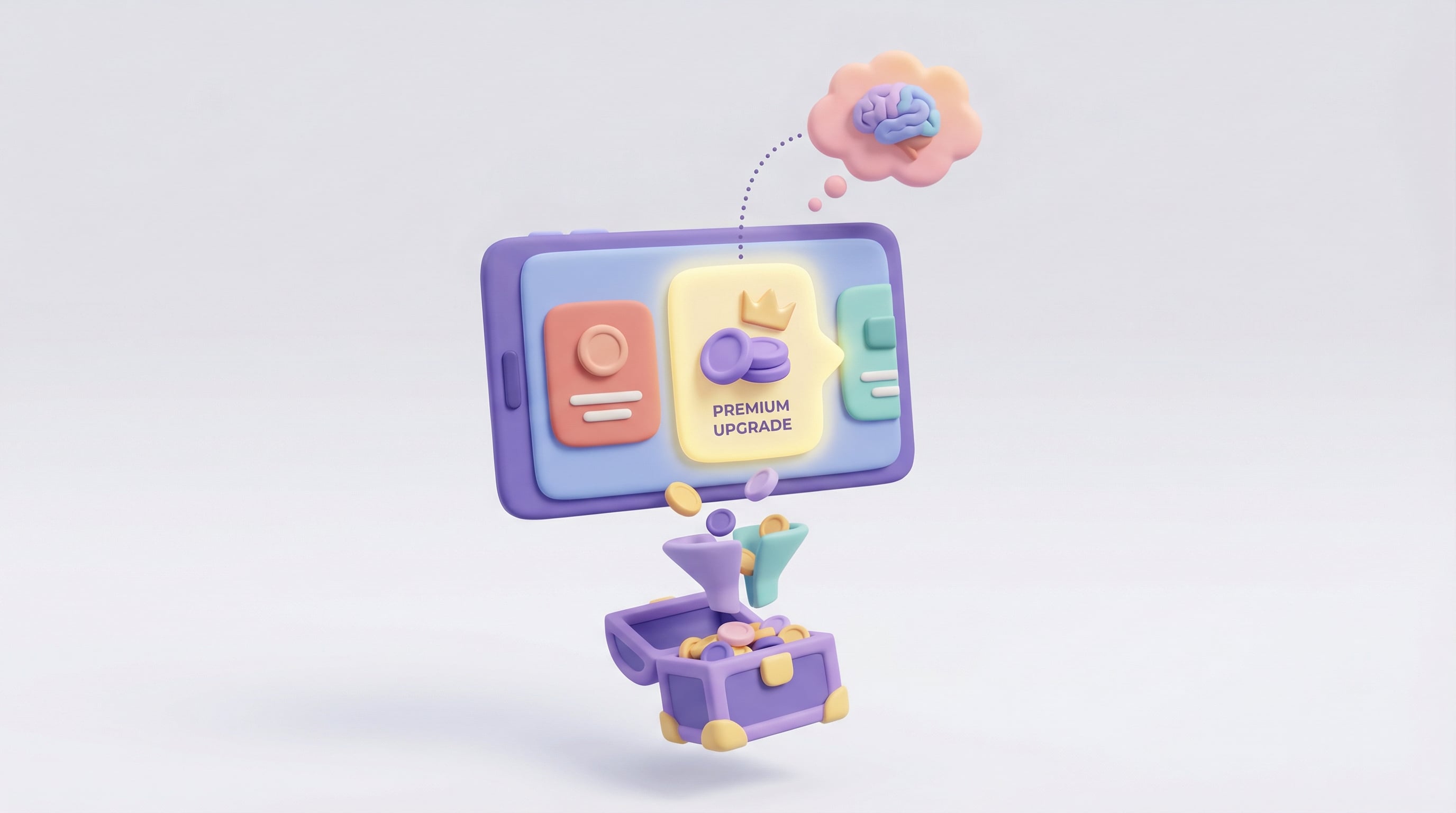
Guests often hesitate to buy expensive add-ons because they lack a frame of reference for value. This is where decoy pricing stabilizes your conversion rates. If you want to sell more "Grocery Delivery" packages at $150, place a "Full Private Catering" option next to it for $600.
The $600 option acts as an anchor. It makes the $150 grocery service feel like a reasonable, high-value compromise. By setting up these tiers in SuitePortal, you stop guests from comparing your prices to the local supermarket and start leading them to compare your service tiers against each other.
3. The Amazon Effect: Eliminating Friction
The single biggest killer of conversion is payment friction. If a guest decides to buy a late check-out at 10:00 AM on departure day, they will not tolerate a three-step manual approval process.
Your portal must function like an e-commerce store. The guest selects the item, the credit card on file is charged immediately via Stripe integration, and the operational workflow triggers automatically. For example, when a late check-out is purchased, SuiteConnect should automatically extend the smart lock code validity, and SuiteKeeper should automatically notify the cleaning crew of the schedule change.
Static Guidebooks vs. Menu-Engineered Portals
The difference between a standard digital guide and a menu-engineered strategy is measurable in RevPAR.
- Presentation: Static PDF lists options alphabetically vs. SuitePortal prioritizes options by profit margin.
- Payment: Manual invoicing/Venmo vs. Instant one-click charge to card on file.
- Fulfillment: Manager manually texts cleaner vs. SuiteKeeper auto-adjusts schedules.
- Timing: Passive link in email vs. Timed SMS notifications when purchasing intent is highest.
Stop Leaking Revenue to Local Vendors
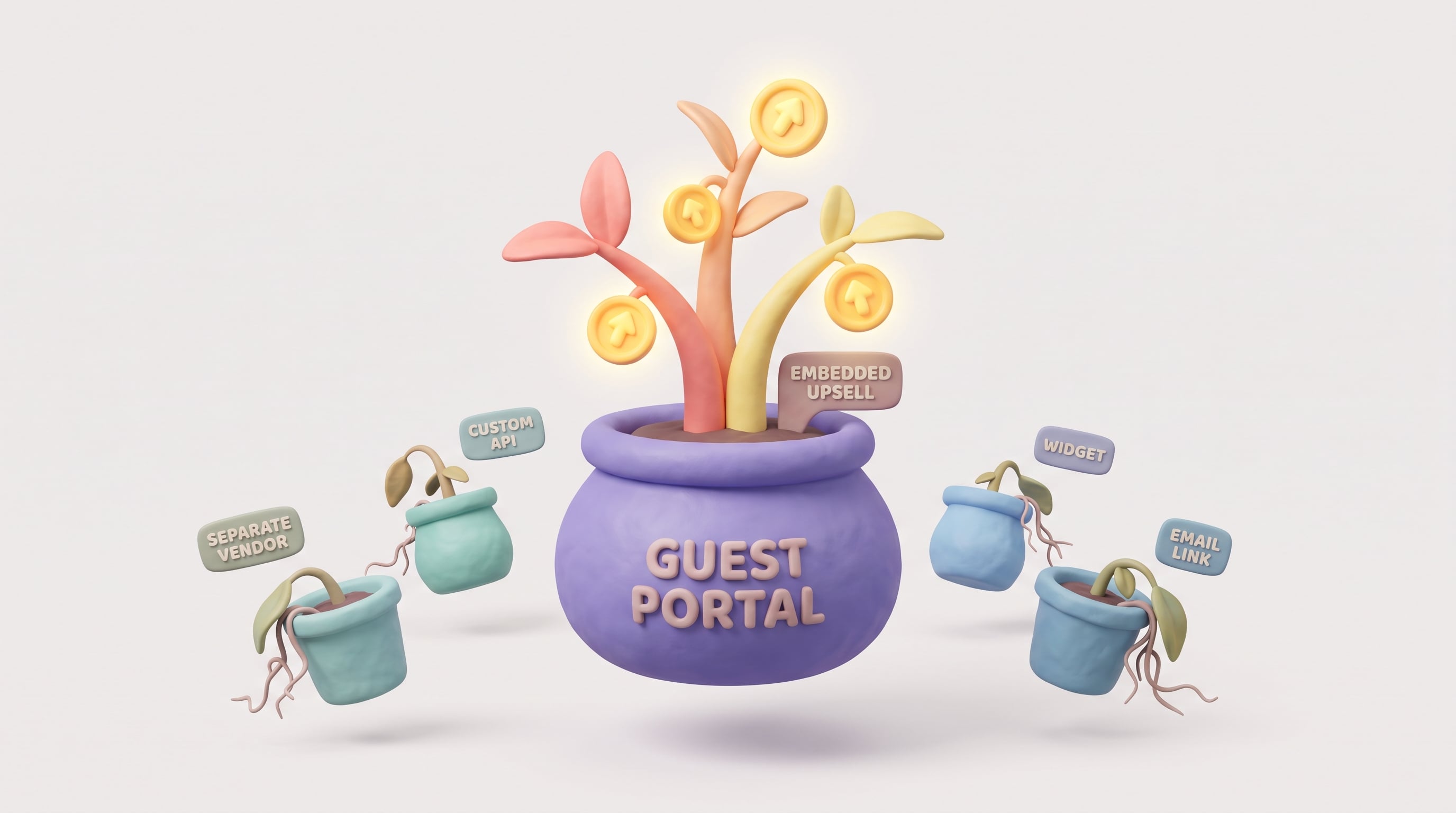
Every time a guest orders DoorDash or books a tour through a flyer in the lobby, you lose share of wallet. You have already paid the customer acquisition cost (CAC) to get them into your property. Do not let third parties monetize your hard work.
By using a menu-engineered approach within your guest portal, you transform "guest support" into a proactive sales channel. You provide the convenience guests demand in 2026 while capturing the revenue your operations deserve.
Ready to Automate Your Operations?See how SuiteOp handles native upsells and payment processing automatically. Book a demo to see it in action.
See it running on your properties
A 30 minute demo with our team, on your own portfolio's workflows.